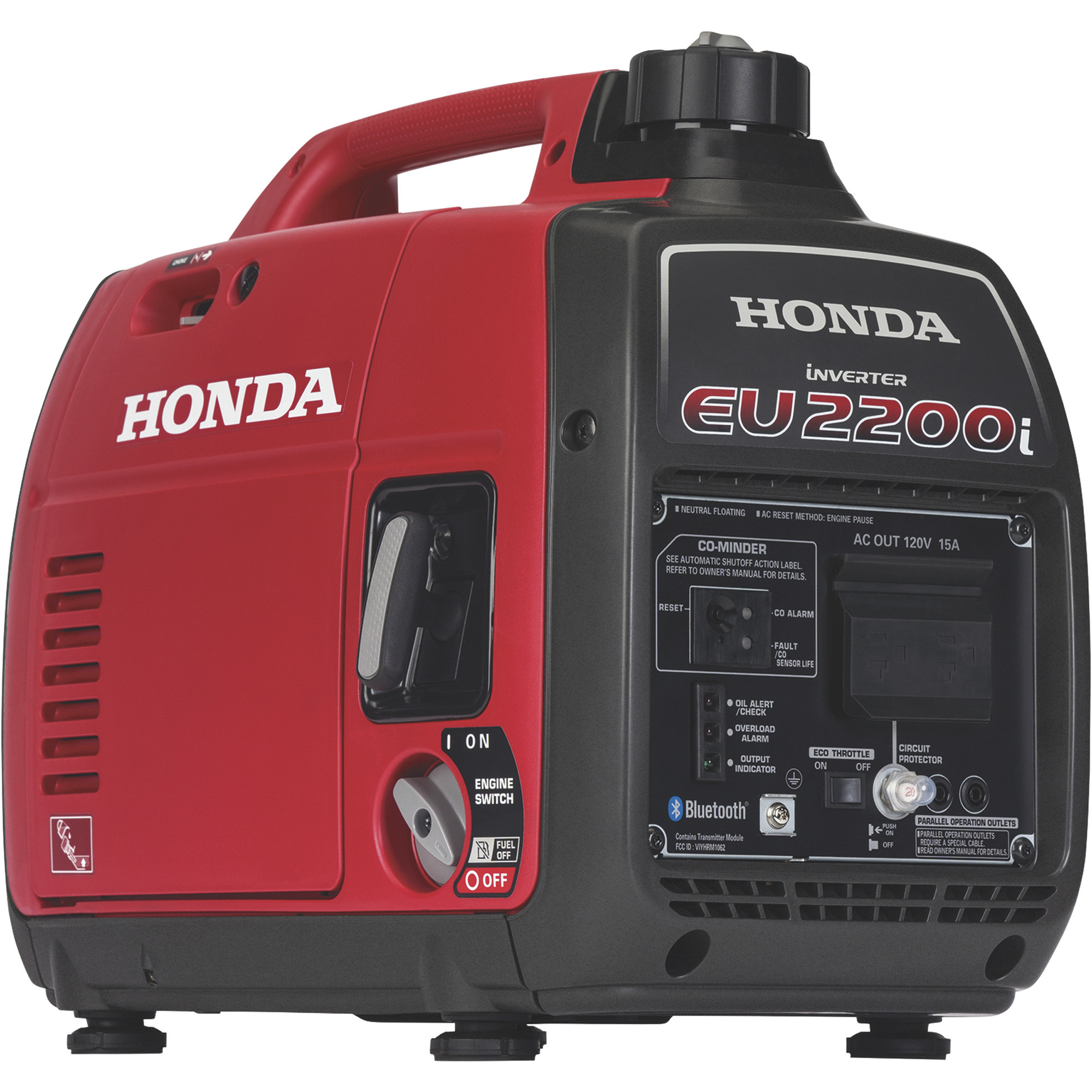
The EU2200i is the small inverter benchmark. Honda rates it at 2,200 starting watts and 1,800 running watts, and the noise rating drops to 48 dB(A) at quarter load with Eco Throttle on. The GXR120 engine is the largest in the small-inverter group, CO-MINDER shuts the machine down if carbon monoxide builds up, and a Bluetooth app tracks output and maintenance. The 0.95-gallon tank gives 8.1 hours at quarter load and 3.2 hours at rated load, and the price is the highest of the small picks.
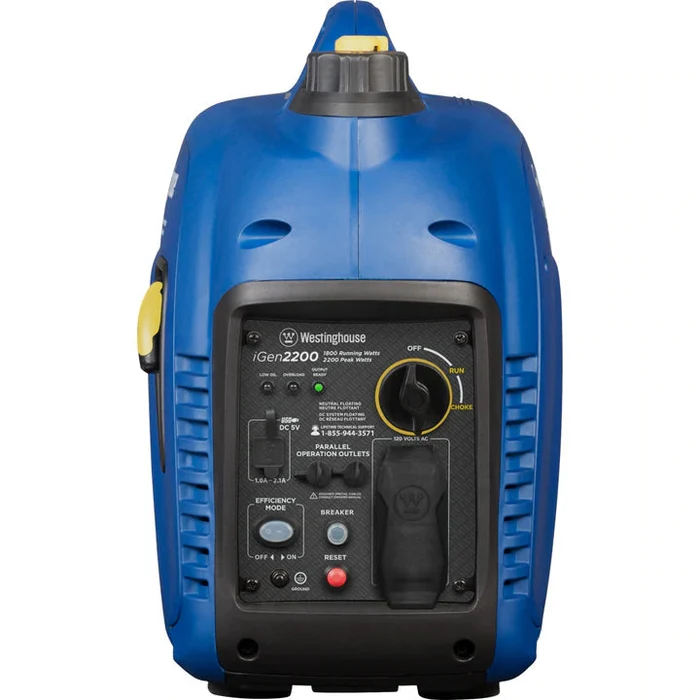
The iGen2200 matches the Honda on rated output — 1,800 running watts and 2,200 peak watts — at an MSRP of $579. Westinghouse rates runtime at 12 hours at 25% load from the 1.14-gallon tank, the longest gasoline runtime in the small group. The panel carries a duplex outlet and two USB ports, Economy Mode stretches fuel, and parallel ports pair it with a second unit. The base model skips a CO sensor and a fuel gauge.
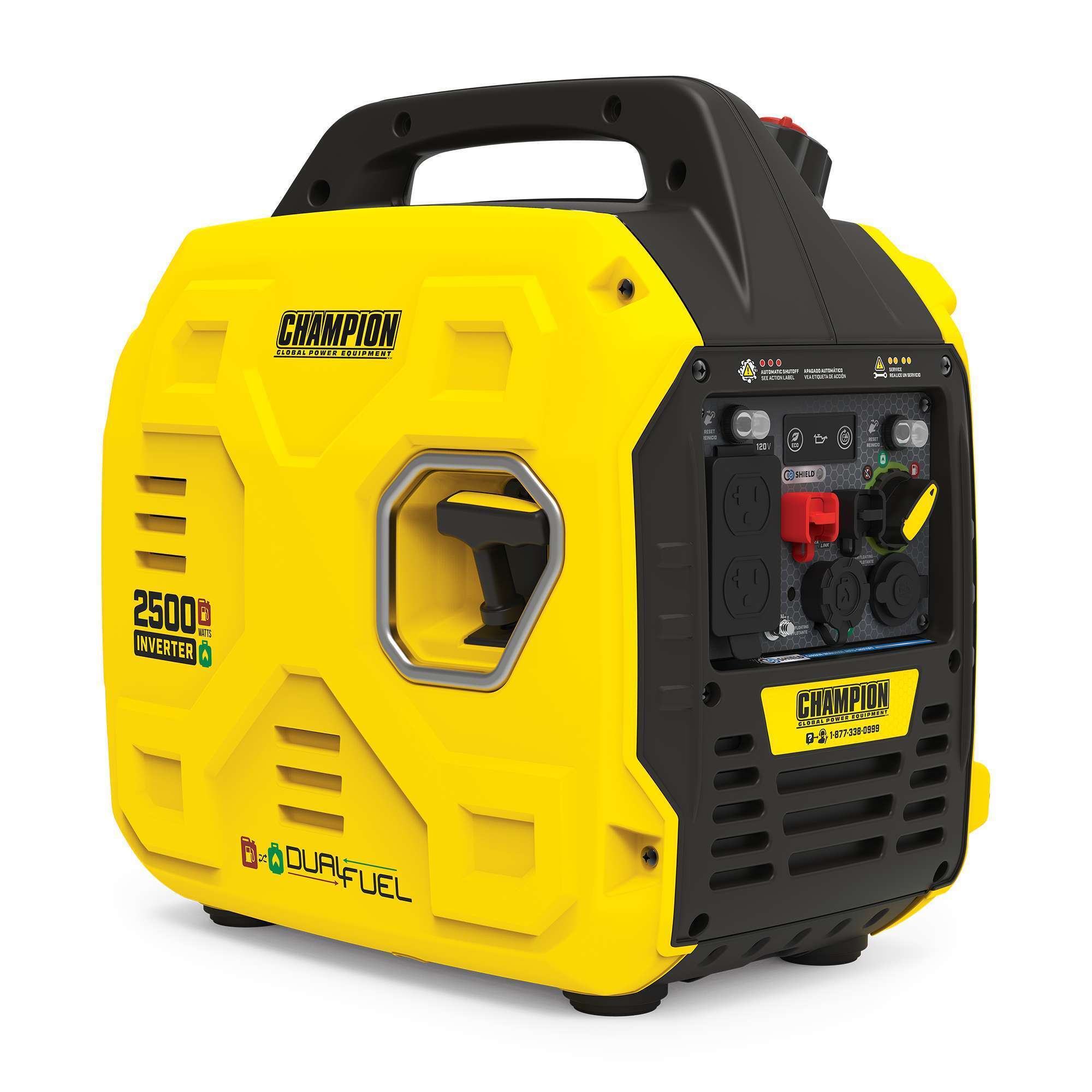
Champion Power Equipment 2500-Watt Dual Fuel Ultralight Inverter Generator (201183)
ASIN B09HN2RQ67
Product image via product listing.
The 201183 is the lightest pick in this roundup at 39 pounds, and it runs on gasoline or propane. Champion rates it at 1,850 running watts on gasoline and 1,665 on propane, with runtime up to 11.5 hours on gasoline and 34 hours on a 20-pound propane tank at 25% load. CO Shield shuts the engine down if carbon monoxide builds up, and the EZ Start Dial handles the choke. The kit includes a dual-port USB adapter.
Specifications
Running watts
1,850 W gasoline, 1,665 W propane
Starting watts
2,500 W
Fuel
Gasoline and propane, 1.1 gal tank
Runtime
11.5 hr gasoline, 34 hr propane at 25% load
Noise
53 dB
Weight
39 lb
Outlets
120V 20A duplex, 12V automotive, USB adapter included
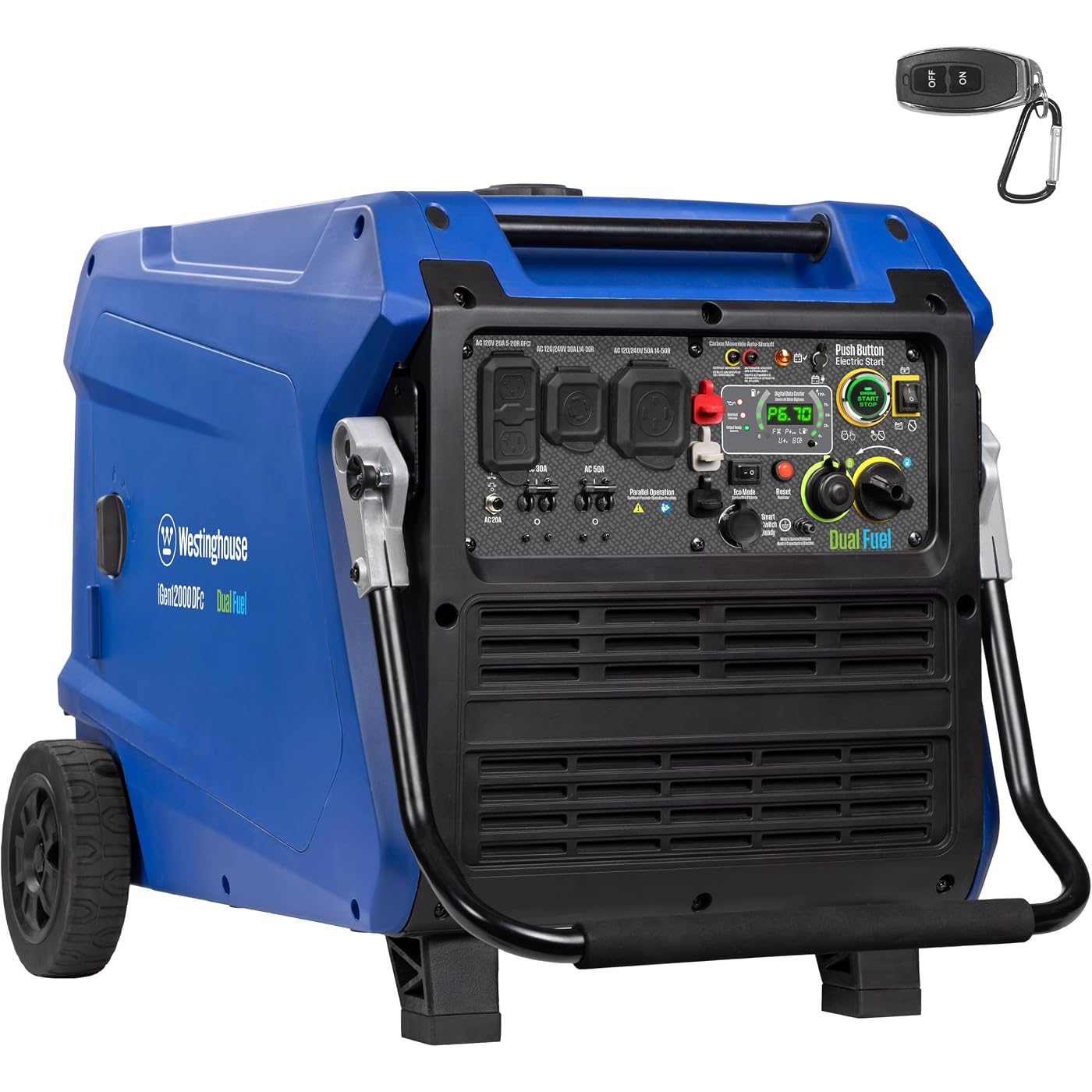
The iGen12000DFc puts 9,000 running watts behind inverter power with THD under 3%. It runs on gasoline or propane, starts by remote, push button, or recoil, and the 7.9-gallon tank is rated for up to 19 hours at 25% load — the longest runtime of the large inverters here. Both a 50-amp 14-50R and a 30-amp L14-30R outlet feed a transfer switch or interlock kit, and parallel ports pair it with a second unit. Westinghouse re-rated this model from 11,000 to 12,000 peak watts; the 9,000 running watts stayed the same.
Specifications
Running watts
9,000 W gasoline, 8,100 W propane
Starting watts
12,000 W gasoline, 11,000 W propane
Fuel
Gasoline and propane, 7.9 gal tank
Runtime
Up to 19 hr at 25% load
Noise
As low as 64 dBA
Weight
187.4 lb
Outlets
14-50R 50A, L14-30R 30A, GFCI duplex
Output quality
THD under 3%, parallel ready, CO sensor
Pros
19-hour runtime at 25% load
Lightest large inverter here at 187.4 lb
50A and 30A transfer-switch-ready outlets
Cons
Propane running output drops to 8,100 W
Peak-watt rating changed with the model name — compare on running watts
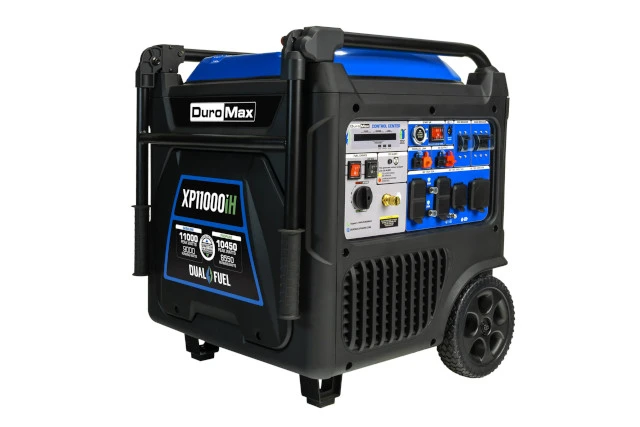
The XP11000iH is the quietest large inverter in this roundup at 61 dBA, and it holds the strongest propane output of the group at 8,550 running watts. The fuel selector switches between gasoline and propane on the control panel, the panel carries both 50-amp and 30-amp transfer-switch outlets, and parallel ports combine two units for 18,000 running watts with a kit. DuroMax backs it with a 5-year limited warranty, the longest coverage here. The price is the highest of the fuel-burning picks.
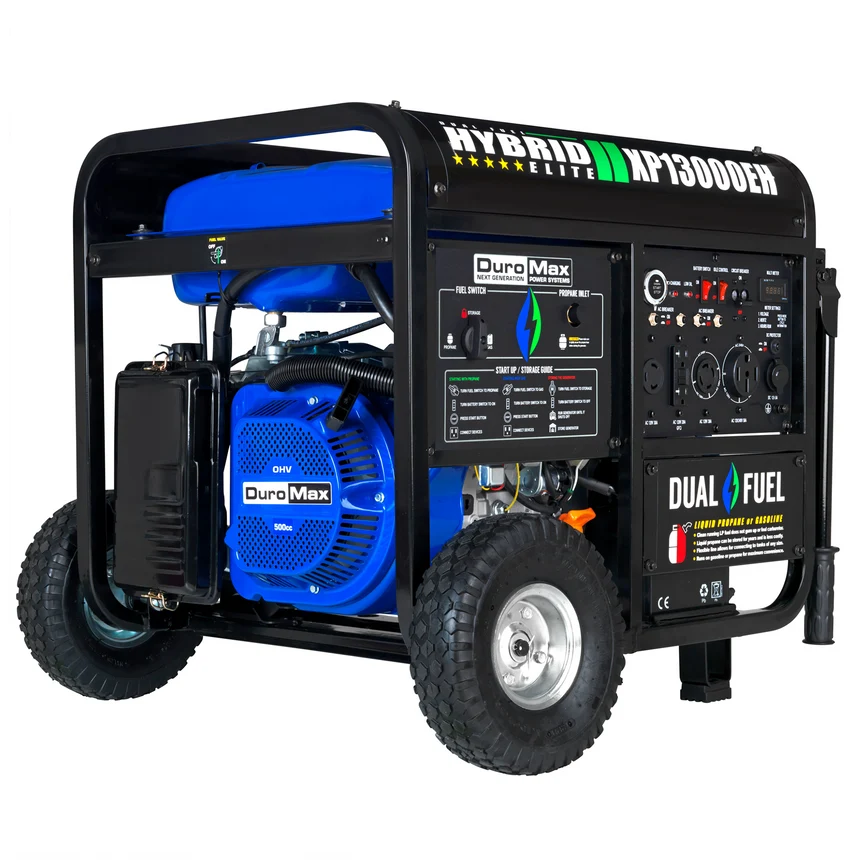
The XP13000EH delivers the most running watts in this roundup: 10,500 on gasoline and 10,000 on propane. The 8.3-gallon tank runs 17 hours at 25% load on gasoline, and the panel stacks a 50-amp transfer-switch-ready outlet with 30-amp locking outlets and GFCI duplexes. Push-button electric start and a CO sensor come standard. DuroMax sells it direct at $1,299 this week against a $1,699 list price.
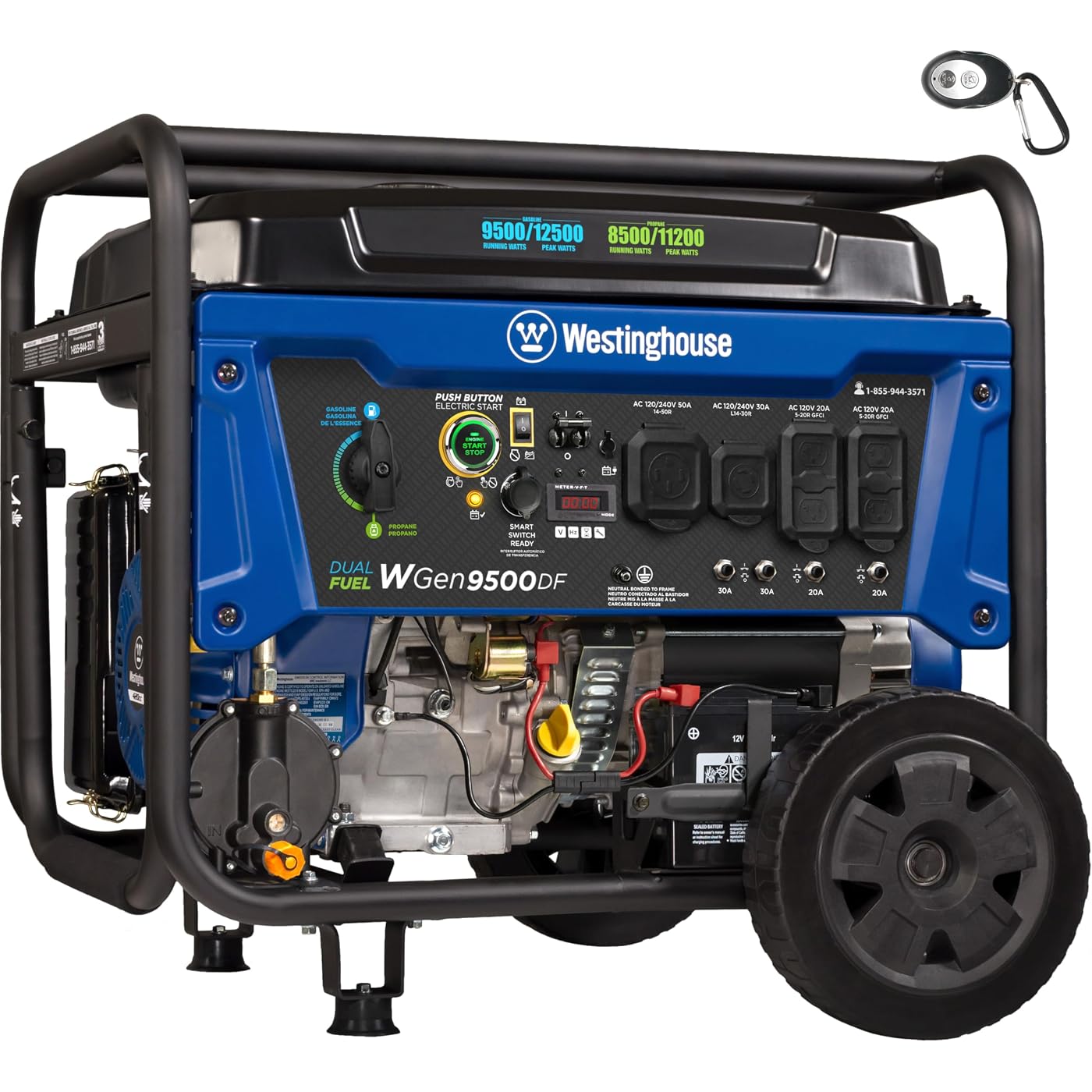
The WGen9500DF posts the lowest cost per running watt in this roundup: 9,500 running watts on gasoline and 8,500 on propane at a $999 street price. It is the only conventional pick here with remote start on a key fob, and the panel carries both 50-amp and 30-amp 240V outlets for a transfer switch. Runtime runs up to 12 hours on the 6.6-gallon gasoline tank and 7 hours on a 20-pound propane tank.
Specifications
Running watts
9,500 W gasoline, 8,500 W propane
Starting watts
12,500 W gasoline, 11,200 W propane
Fuel
Gasoline and propane, 6.6 gal tank
Runtime
Up to 12 hr on gasoline, 7 hr on 20-lb propane tank
Noise
74 dBA
Weight
211 lb
Outlets
14-50R 50A, L14-30R 30A, 4 GFCI 5-20R
Start
Remote with key fob, electric, recoil — 457cc engine
Pros
Lowest cost per running watt here
Remote start with key fob
Both 50A and 30A 240V outlets
Cons
Smallest tank of the conventional picks at 6.6 gal
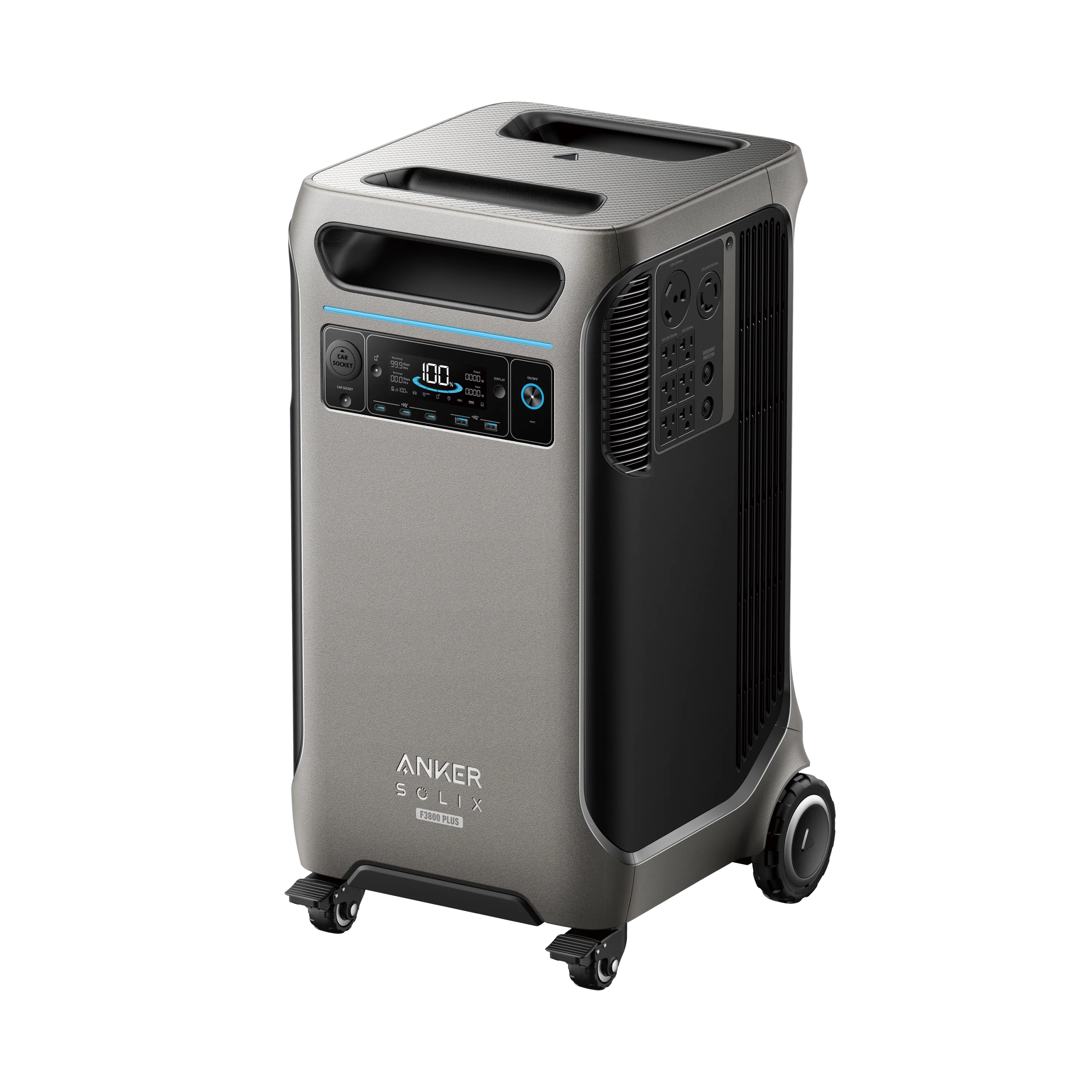
The F3800 Plus is the only power station in this roundup with native 120/240V output from a single unit, at 6,000 watts. The 3,840Wh LFP battery expands with up to six BP3800 batteries to 26.9kWh, and solar input tops the group at 3,200 watts across dual MPPT inputs. The outlet panel includes a TT-30R for an RV and an L14-30R for a transfer switch. At 136.7 pounds it rolls on its wheels and stays where it lands.
Specifications
Capacity
3,840Wh LFP (LiFePO4)
AC output
6,000W, 120/240V dual voltage
Expansion
Up to 26.9kWh with 6 BP3800 batteries
Solar input
Up to 3,200W, dual MPPT
Weight
136.7 lb
Outlets
6 5-20R, TT-30R, L14-30R, USB-C, USB-A, car outlet
Pros
Native 240V output from one unit
Expands to 26.9kWh
3,200W solar input leads the power stations
Cons
Heaviest power station at 136.7 lb
240V output is unavailable while charging from a 120V outlet
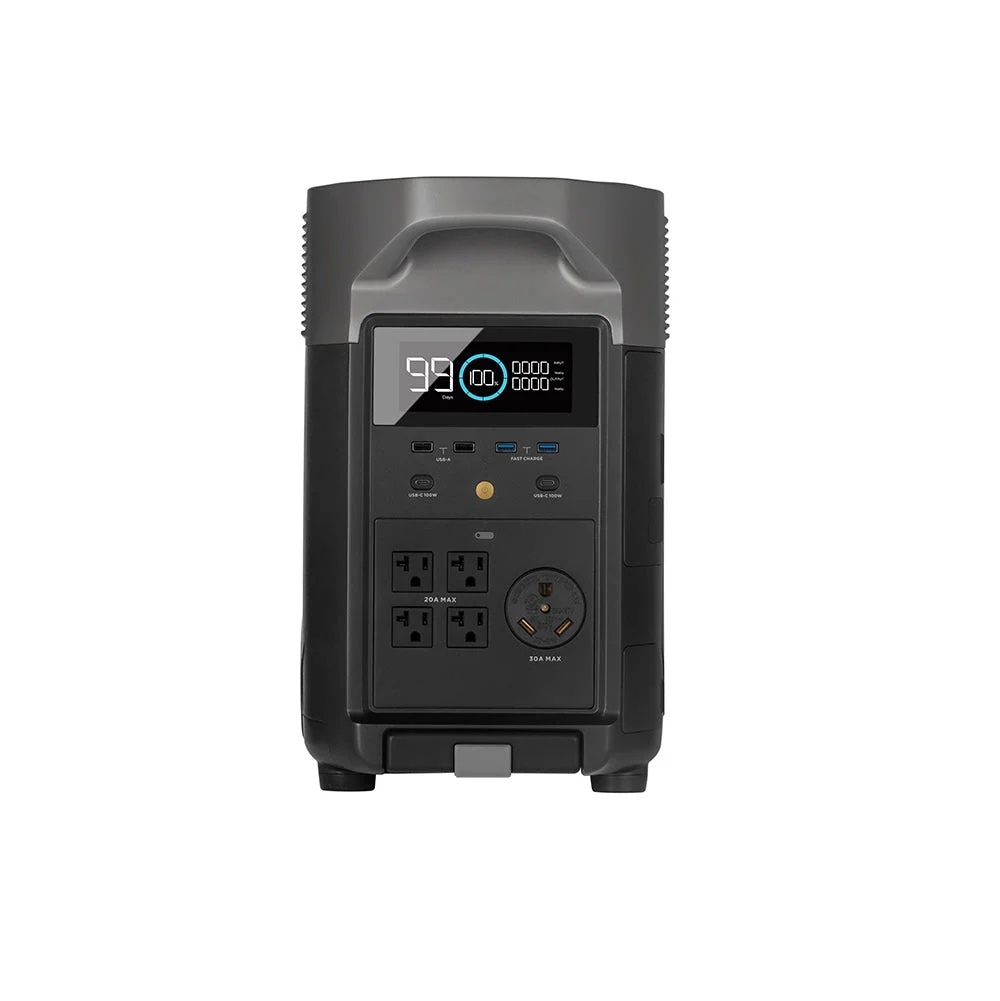
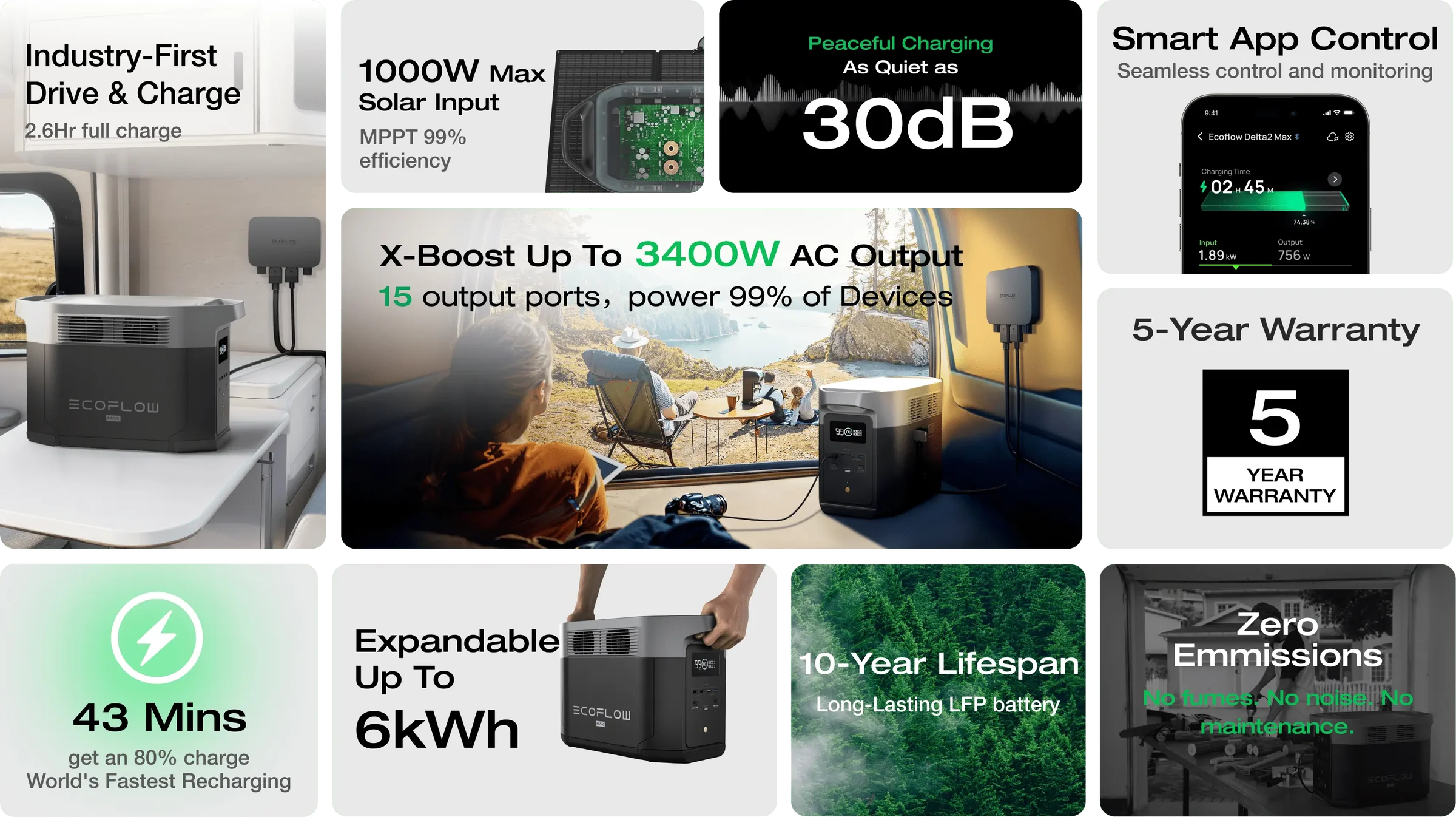
The DELTA Pro pairs 3,600Wh of LFP capacity with 3,600W of AC output and a 7,200W surge rating. Capacity expands to 25kWh with extra batteries and a second unit, and charging options run from 1,600W of solar to an EV charging station with an adapter. The 15-outlet panel includes a 30-amp TT-30R for an RV. A single unit outputs 120V; 240V output takes a second unit and the Double Voltage Hub.
The DELTA 2 Max is the carry-it-yourself power station: 2,048Wh and 2,400W of output at 50 pounds. Six AC outlets cover a campsite or a room of home essentials, solar input reaches 1,000 watts across two ports, and extra batteries expand capacity to 6,144Wh. Output is 120V across the panel, and RV hookups need an adapter for the missing TT-30 outlet.
Start with the load. A fridge, a few lights, and phone charging sit inside the small inverters: the Honda EU2200i for quiet running, the Westinghouse iGen2200 for the same rated output at half the money, and the Champion 201183 for dual fuel at 39 pounds. Whole-home backup on a transfer switch starts with the large dual-fuel machines — the iGen12000DFc and DuroMax XP11000iH on inverter power, the XP13000EH for the most running watts, and the WGen9500DF for value. Indoor and silent running belongs to the power stations: the Anker SOLIX F3800 Plus for single-unit 240V, the EcoFlow DELTA Pro for expansion, and the DELTA 2 Max for a unit one person carries.
Sizing and setup
Add up running watts for everything that runs at once, then check starting watts for motor loads such as fridge compressors, well pumps, and furnaces — motors draw a surge at startup that the starting-watt rating has to cover. Inverter models hold THD at 3% or under, the clean output electronics expect. A 50-amp 14-50R or 30-amp L14-30R outlet feeds a transfer switch or interlock kit for home backup, and that panel work belongs to a licensed electrician. Run fuel-burning generators outdoors, clear of windows, doors, and vents, and let a CO sensor-equipped model shut down on its own if carbon monoxide builds up. Power stations run indoors and recharge from the wall, solar panels, or a fuel generator during a long outage.
As an Amazon Associate, The Weekend Workshop earns from qualifying purchases. Product prices and availability can change.