10 Best Smart Lights of 2026 — Compared & Reviewed
From budget Wi-Fi bulbs to Matter-certified strips and wall panels, these picks cover the lights that actually fit real living rooms, bedrooms and home offices.
Last updated: September 2026
We may earn a commission if you buy through our Amazon links. It does not change what you pay or how the lights are ranked.
How we sized them up
This is a spec-led shortlist built from published specs and retailer listings. We compared ecosystem compatibility (Alexa, Google Home, Apple Home, Matter), connectivity (hub, Wi-Fi, Bluetooth, Thread), brightness in lumens, color and white range, and price per light. For most homes, matching the light to the voice assistant and phone apps already in use matters more than chasing the highest lumen number. We ranked smart bulbs first, then strips, then wall panels, with the strongest all-round picks at the top.
The quick cut
Start with the ecosystem you already use, then check brightness and whether a hub is required. Tap any pick to jump straight to the full breakdown.
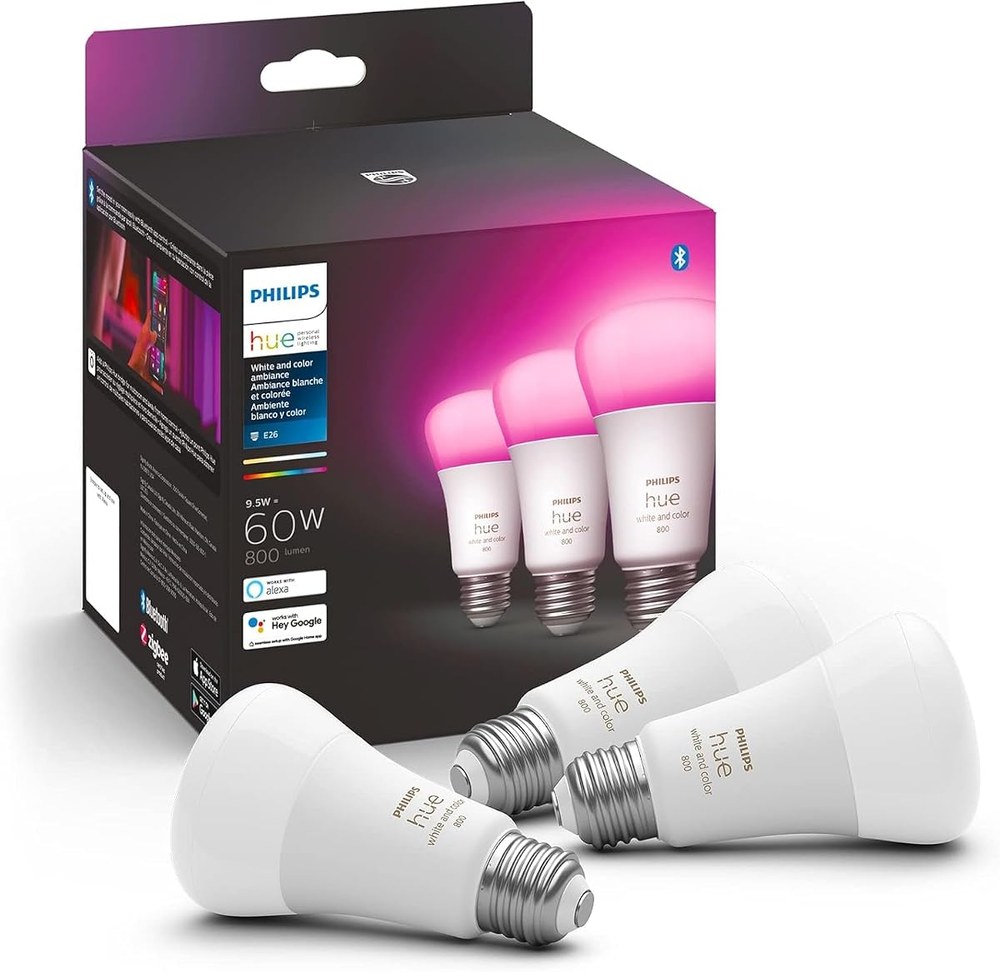
Philips Hue White and Color Ambiance A19 Smart Bulbs, 3-Pack
Model 562785 · ASIN B08D9N7RJ4
Product image: Amazon product media.
Who it’s forThis is the safe first choice when the goal is a whole-home system that keeps growing. Each bulb puts out 800 lumens with 16 million colors plus tunable white, and Bluetooth means the three bulbs work out of the box with the Hue app. Adding a Hue Bridge later unlocks the full platform: up to 50 lights, out-of-home control, routines, and integration with switches, dimmers and sensors. It works with Alexa, Google Assistant and Apple Home. The 3-pack usually runs around $135, which makes each bulb the priciest here — but no other ecosystem is as deep.
Specifications
Type
A19 LED bulb (E26)
Brightness
800 lm
Color
White and color ambiance (16M colors)
Connectivity
Bluetooth + Zigbee (Hue Bridge optional)
Voice
Alexa, Google Assistant, Apple Home
Pros
Largest smart-lighting ecosystem available
Bluetooth works out of the box, no hub required to start
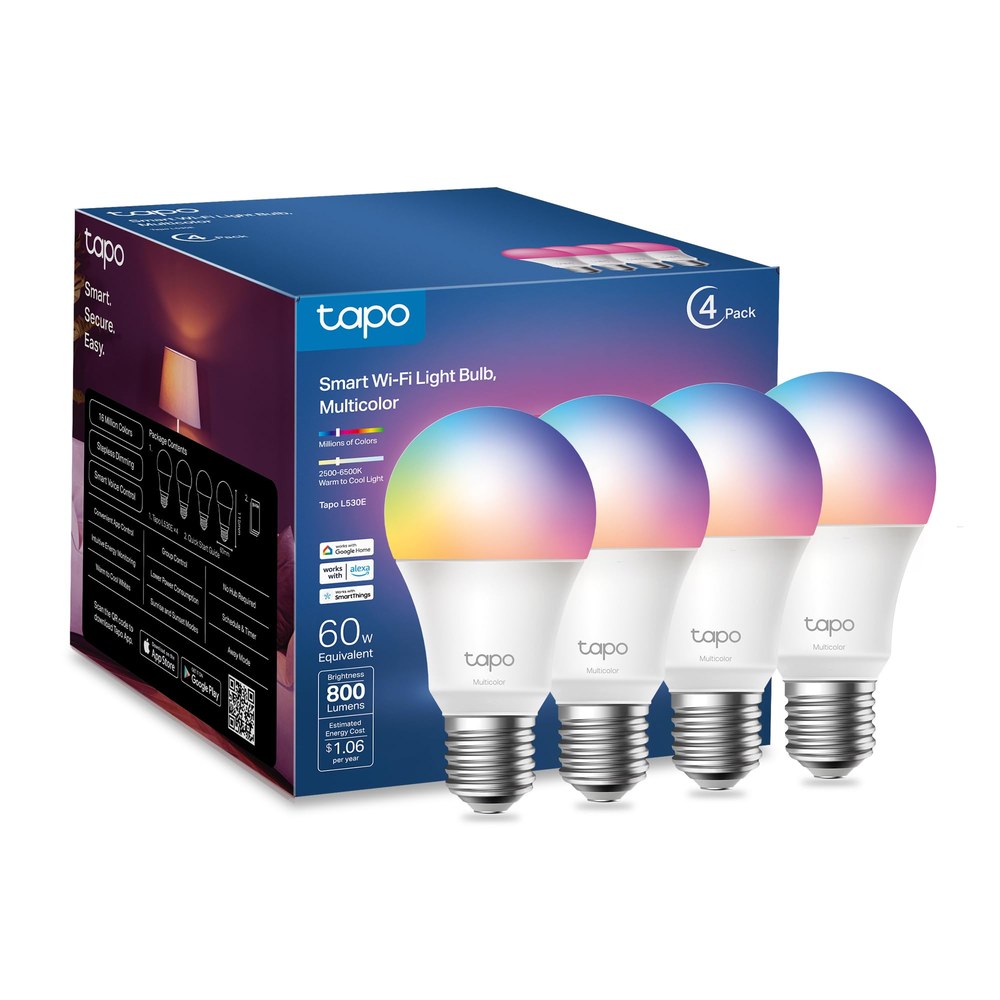
TP-Link Tapo Smart Wi-Fi Light Bulbs, 4-Pack (L530E)
Model L530E · ASIN B0B2KWJLZT
Product image: Amazon product media.
Who it’s forThe Tapo L530E is the bulb to buy when you want color for every lamp without doing math. The 4-pack usually sells around $24, and each bulb delivers 800 lumens, 16 million colors and dimming over a direct 2.4 GHz Wi-Fi connection — no hub and no bridge. Voice control works through Alexa and Google Assistant, and the Tapo app covers schedules, timers and an away mode that turns lights on and off while you are out. Color quality and the app experience are simpler than Hue’s, but at this price they don’t need to compete with it.
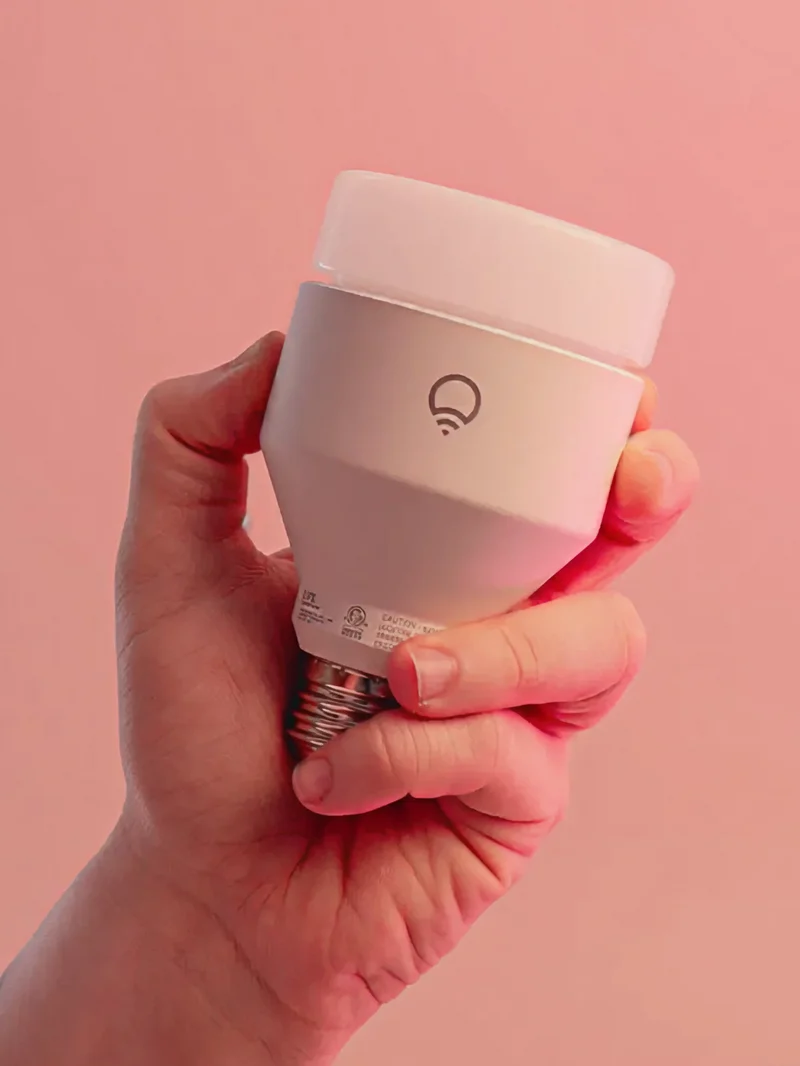
LIFX Color A19 Wi-Fi Smart LED Light Bulbs, 2-Pack
ASIN B08BKZFHQQ
Product image: LIFX product media.
Who it’s forLIFX has built its reputation on one idea: Wi-Fi bulbs with strong color that need no bridge at all. This 2-pack (usually around $33) gives you 800 lumens, billions of colors and full white range per bulb, controlled through the LIFX app or by voice with Alexa, Google Assistant, HomeKit or Siri. The colors stay vivid at higher brightness levels, which is where budget bulbs usually wash out. Wi-Fi congestion is the one tradeoff with a house full of them, so this fits best for a few feature lights rather than twenty bulbs on one router.
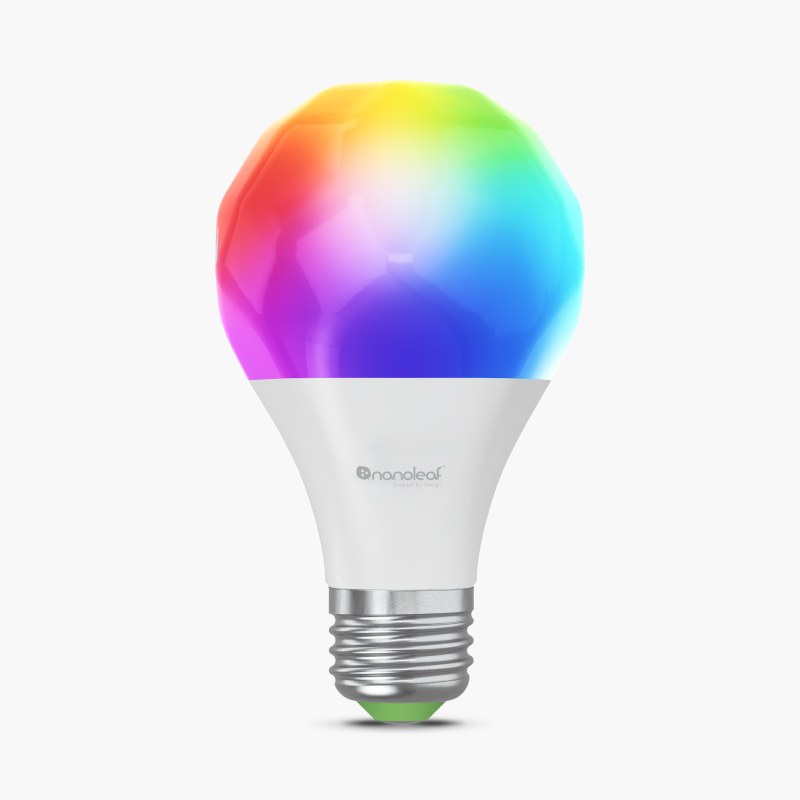
Who it’s forThis is the pick for a household that mixes phone platforms or plans to. The Essentials bulbs speak Matter, so one bulb joins Apple Home, Google Home, Alexa and SmartThings alike, over Wi-Fi with Thread support. At 1000 lumens per bulb they are noticeably brighter than most color bulbs here, and the 4-pack usually runs about $45. Set-up needs a Matter-compatible hub or Thread border router, so check your speaker or hub list first. The Nanoleaf app adds music sync and scenes for more creative control.
Specifications
Type
A19 LED bulb (E26)
Brightness
1000 lm
Color
RGBTW, 16 million+ colors
Connectivity
Matter, Wi-Fi, Thread, Bluetooth
Voice
Alexa, Google Assistant, Apple Home, SmartThings
Pros
Matter support across all major platforms
1000 lumens — brighter than most color bulbs
Thread option keeps the Wi-Fi band clear
Cons
Set up through a Matter hub or Thread border router
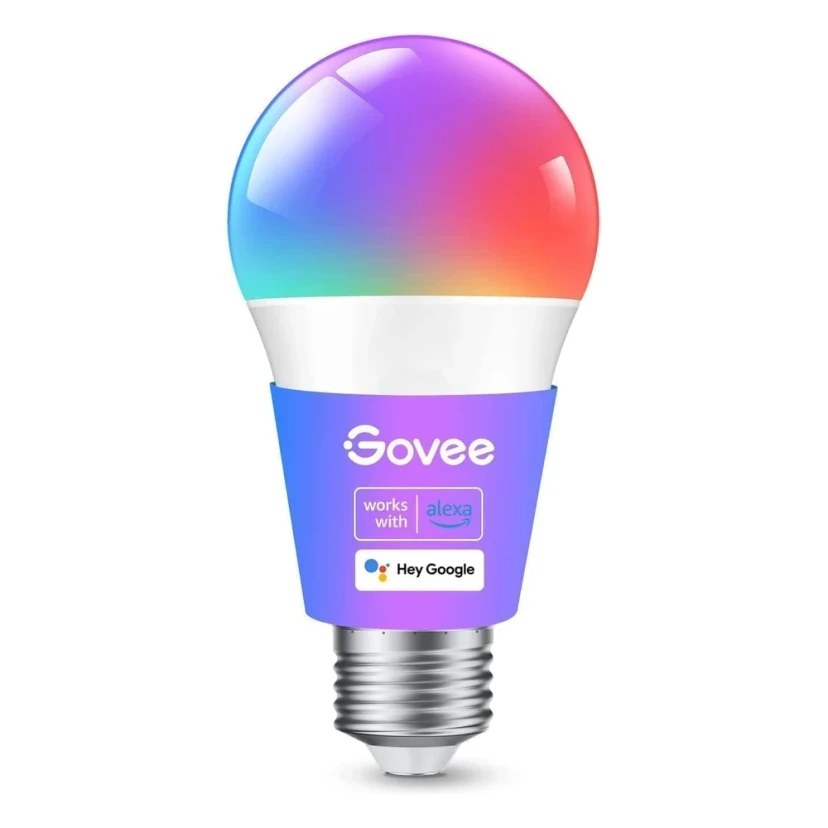
Who it’s forGovee’s strength is the app, and these bulbs show why: 54 preset scene modes, a music-sync mode that follows sound through the phone microphone, and 16 million colors, all for about $31 in the 4-pack. Each bulb is 800 lumens of RGBWW with tunable whites, and control runs over Wi-Fi and Bluetooth through the Govee Home app, with Alexa and Google Assistant voice support. The buyer rating sits around 4.5 stars from well over 10,000 reviews. It is the fun-first pick — best for bedrooms, game rooms and parties rather than a calm whole-home system.
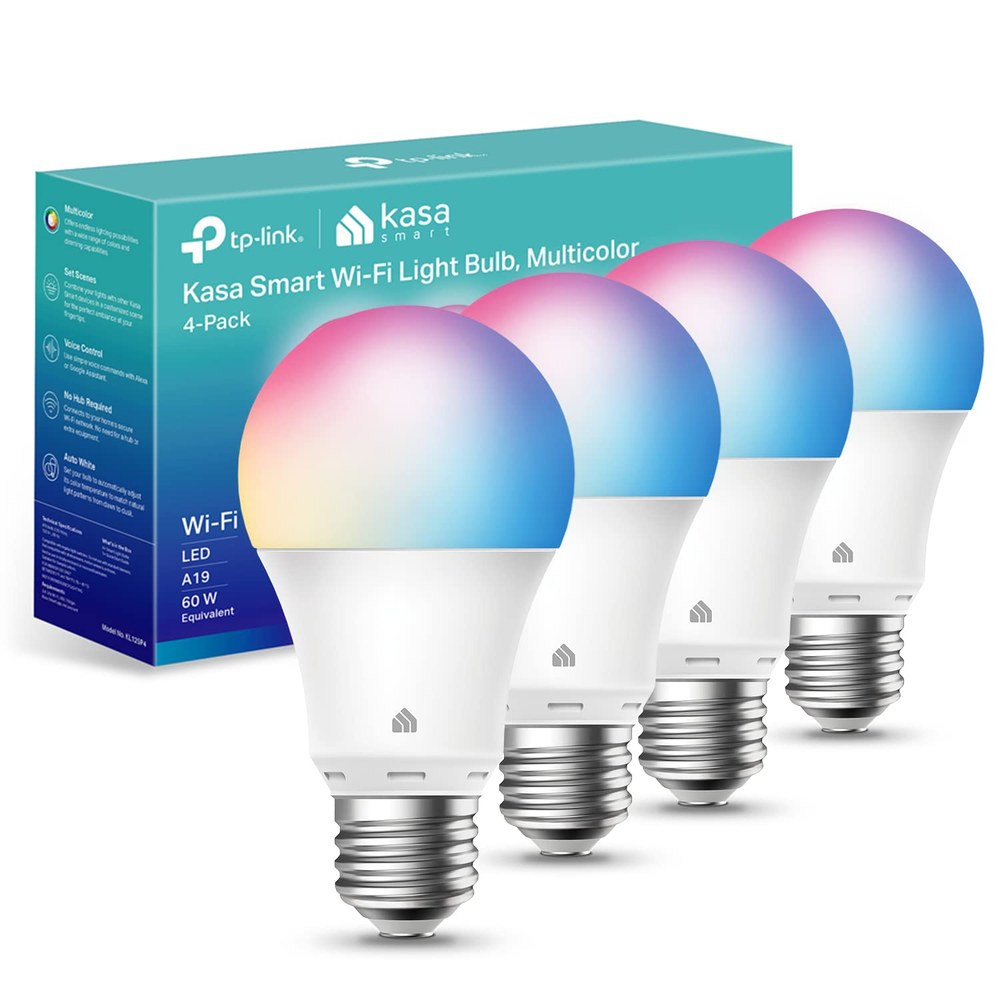
Who it’s forWhen the job is lighting a whole apartment on a tight budget, the KL125 is hard to beat. Single bulbs regularly sell for $8–$9, and the 4-pack lands around $40. You still get 800 lumens, full color with warm-to-cool white adjustment (2500K–6500K), schedules and sunrise/sunset timers over direct Wi-Fi — plus energy monitoring that tracks each bulb’s power draw, which none of the other budget picks include. Voice control covers Alexa and Google Assistant. There is no Apple Home support, and the colors are pleasant rather than spectacular, but for background lighting in every room the math works.
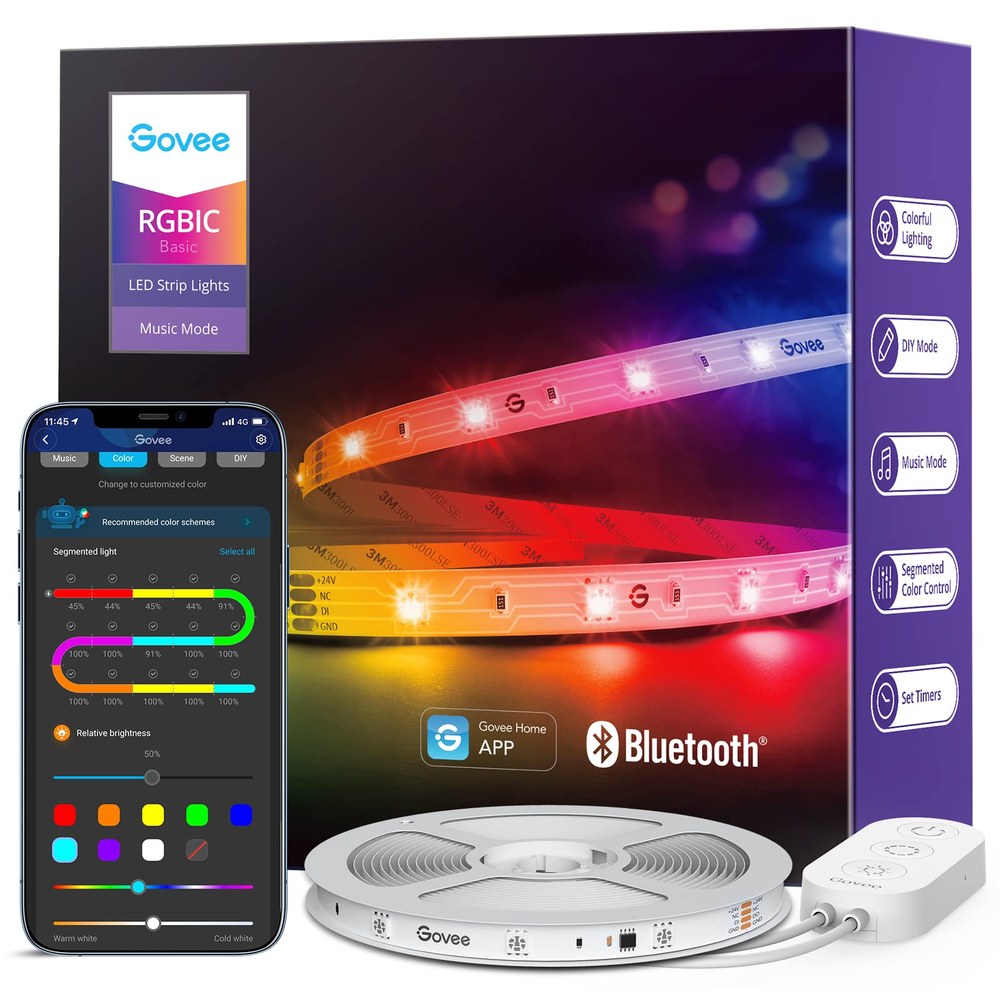
Who it’s forThis is the cheapest way to put real color behind a TV, desk or bed frame. RGBIC means the strip shows multiple colors at once — gradients and animated effects instead of one flat color — and it sells for about $13 for a 16.4-foot roll. The Govee Home app drives 64+ scene modes and music sync, and the strip works with Alexa and Google Assistant. Whites and brightness are basic next to the pricier strips here, and the adhesive backing works best on a clean, smooth surface. For accent lighting on a budget, though, it is the obvious starting point.
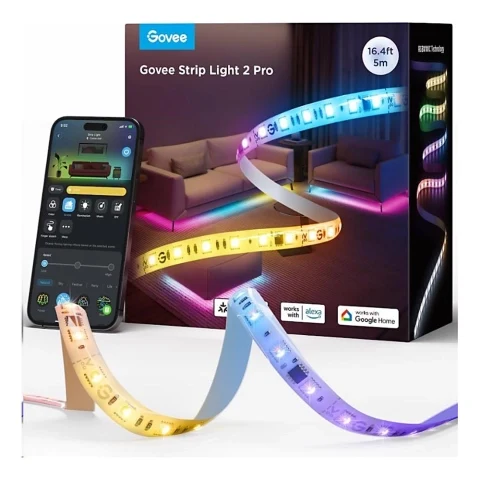
Govee RGBWWIC Strip Light 2 Pro with Matter, 16.4 ft
Model H61F5 · ASIN B0D7MKV1CK
Product image: Retail product listing.
Who it’s forWhen a strip has to pull double duty as accent and actual lighting, the 2 Pro earns its roughly $100 price. The RGBWW lamp beads produce genuine warm-to-cool white (2700K–6500K) alongside the color effects, 50 individually addressable segments handle smooth gradients, and Matter support brings it into Apple Home, Google Home and Alexa without a hub. The 4.4-star Amazon rating reflects that this is the strip people upgrade to after the budget one. Advanced color effects still live in the Govee app, so expect to use both the app and your voice assistant.
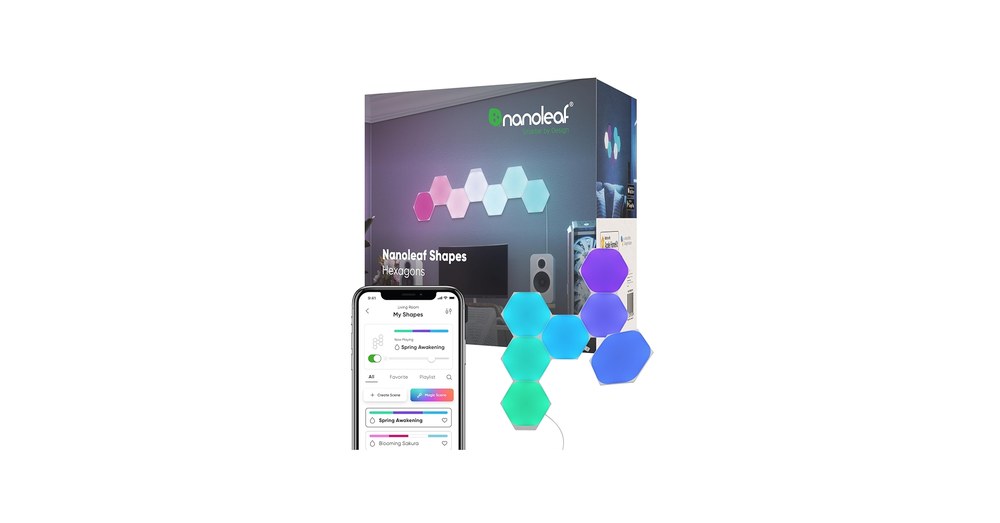
Who it’s forPanels are the only pick here that doubles as wall art. The 7-panel Smarter Kit (usually around $200) mounts with adhesive pads, and each hexagon shows independent RGBW color for animated scenes, music sync and screen mirroring. Layouts can be rearranged and expanded with add-on packs. Control runs through the Nanoleaf app with Alexa and Google Assistant voice support. This is a statement piece for a game room, office or teen bedroom — a lot of money per lumen compared with a bulb, and worth it only if the look matters as much as the light.
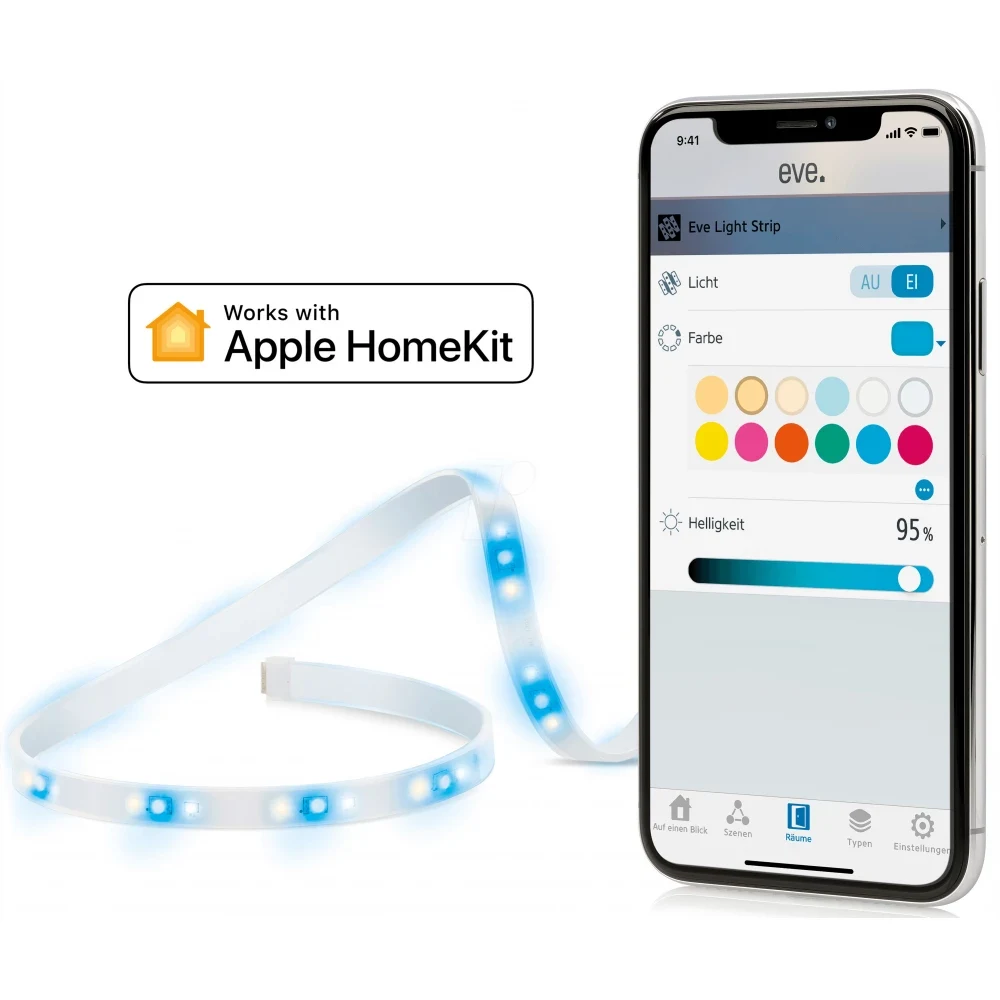
Who it’s forEve built this strip for one audience: Apple households. It pairs directly with Apple Home over Wi-Fi — no bridge, no extra app account — and supports HomeKit Adaptive Lighting, which shifts color temperature through the day on its own. At 1800 lumens over 6.6 feet it is one of the brightest strips here, and it cuts to length or extends to 32.8 feet with add-on strips. It usually runs about $80, and it has earned a 4.5-out-of-5 review from AppleInsider. Android and Alexa users should look elsewhere; this strip assumes an iPhone in the house.
Match the light to the ecosystem you already use, then check the practical details. These are the ones that actually matter.
Ecosystems and Matter
Every light here talks to at least one of Alexa, Google Home or Apple Home — pick the one you already use for everything else, since mixing ecosystems means juggling apps. Matter is the newer standard that lets one device join all of them at once. Matter over Wi-Fi needs a Matter-compatible hub; Matter over Thread additionally needs a Thread border router, which many newer speakers and hubs (HomePod mini, recent Echo models, Nest Hub) already include. If you only own one phone and one speaker, Matter matters less than price.
Hubs vs Wi-Fi vs Bluetooth
A hub (like the Hue Bridge) costs extra but keeps lights off your Wi-Fi and enables the best reliability for large setups. Wi-Fi bulbs are the simplest start — no hub — but each one is another device on your 2.4 GHz network, and nearly all smart lights use 2.4 GHz only, so keep your router’s 2.4 GHz band on during setup. Bluetooth-only control is room-scale: fine for one strip, wrong for a whole house.
Brightness and color
For real lighting, read lumens first and colors second. 800 lumens replaces a 60W bulb; 1100 lumens noticeably brightens a reading lamp or kitchen. Cheap strips look great in photos but read dim in a lit room — the Eve strip’s 1800 lumens is the exception. If a bulb or strip will be your main light, check the white range (2700K–6500K covers warm evening to daylight) rather than the color count.
Schedules and automation
This is where smart lights earn their keep: sunrise/sunset timers, schedules that fake occupancy while you travel, and wake-up routines that brighten gradually. Most apps include these free; Matter bulbs lean on your ecosystem’s app instead. Two things to avoid: never put a smart bulb on a traditional dimmer switch (it conflicts with the bulb’s own dimming and can cause flicker), and skip no-name brands whose companion apps are the real product — a great bulb with an abandoned app is a dumb bulb in a year.
Specifications are based on published manufacturer and retailer information for the listed models. Check the current product listing for package contents and compatibility before ordering.