A hack saw is the cheapest way to cut metal, and most of these cost less than lunch. These ten cover full-size high-tension frames, multi-position saws, and compact models for the spots a full frame will not reach.
Last updated: September 2026
We may earn a commission if you buy through our Amazon links. It does not change what you pay or how the tools are ranked.
How we sized them up
This is a spec-led shortlist built from published specs, manufacturer product pages, and retailer listings. We compared frame tension ratings, throat depth, included blade TPI, blade-change design, flush-cut mounting positions, onboard blade storage, and compact-frame options. Ratings shown come from Amazon product data for the listed model where a current listing could be confirmed, observed in September 2026; prices are approximate and change often. This guide is built from published information only — we did not run hands-on cutting tests. For blades and edge work after the cut, power sanders pick up where hand saws stop; see our guide to the best orbital sanders.
The quick cut
Start with the size of the frame, then check the tension and blade. Tap any pick to jump straight to the full breakdown.
Who it’s forThe HT50 in the name is the headline: this frame tensions blades up to 50,000 PSI, the stiffest frame in this group. An I-beam cross section keeps it from flexing under that load, so cuts track straighter. It ships with one 24-TPI blade and stores five more inside the frame, and it accepts standard reciprocating-saw blades for use as a jab saw in tight spots.
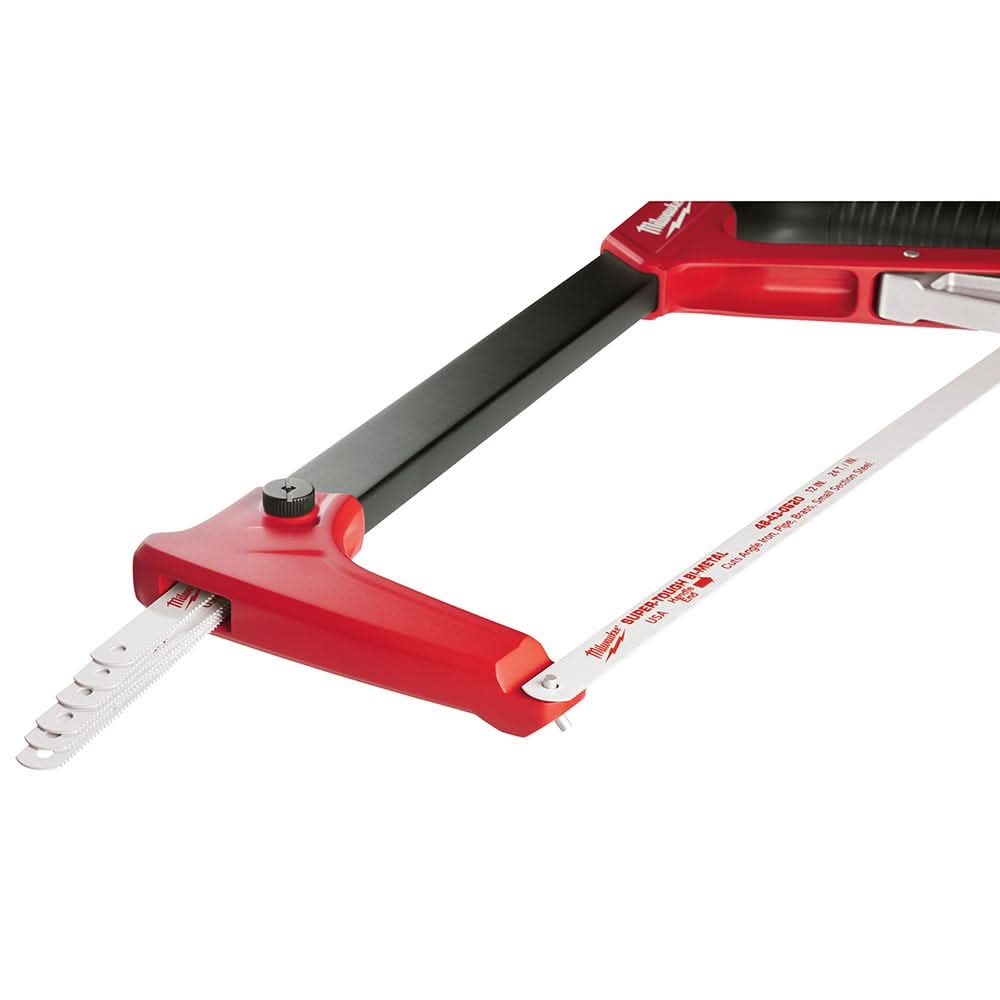
Who it’s forMilwaukee pairs a reinforced high-tension frame with the comfort details of a modern hand tool: a composite handle with a rubber overmold and a large tension knob. Six blades store inside the frame, and the blade mounts at 45 degrees for flush cuts as well as the standard 90-degree position. The usual street price lands around $21 to $25.
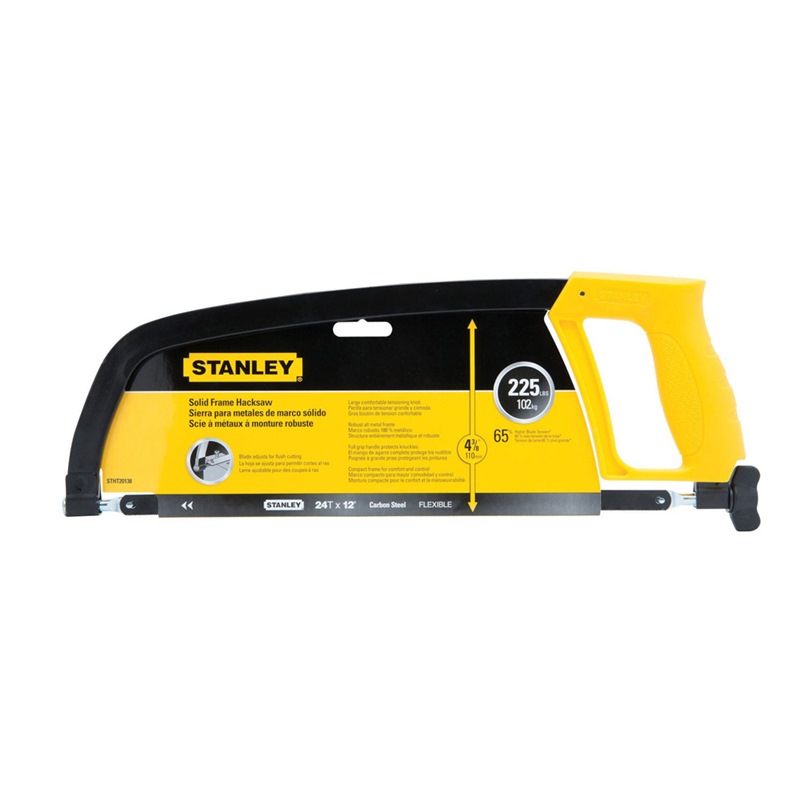
Who it’s forThis is the least expensive way into a true high-tension frame. The all-metal frame tensions blades up to 225 pounds, the 4⅜-inch throat clears common pipe and bar stock, and the blade sets at 90 or 180 degrees for flush cuts. The full-grip handle and oversized tension knob keep adjustments simple. Typical price is about $10 to $13.
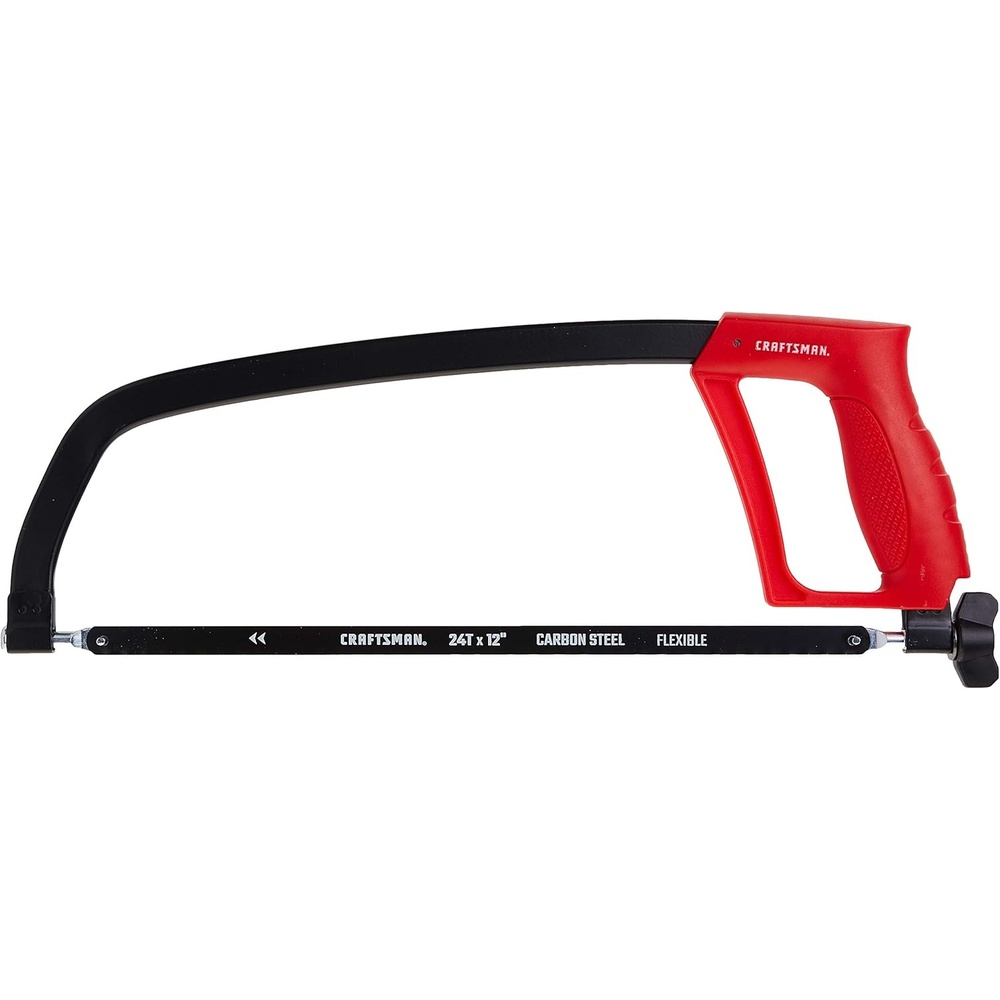
Who it’s forThe Craftsman covers the same ground as the other budget high-tension frames — 225 pounds of blade tension, a 12-inch blade, and a 4⅜-inch throat — with two extras: a lifetime warranty and one of the biggest review counts in this group. The blade adjusts to 90 and 180 degrees for flush cuts, and the full-grip handle keeps long cuts comfortable. Sale prices dip near $10; regular price runs about $17.
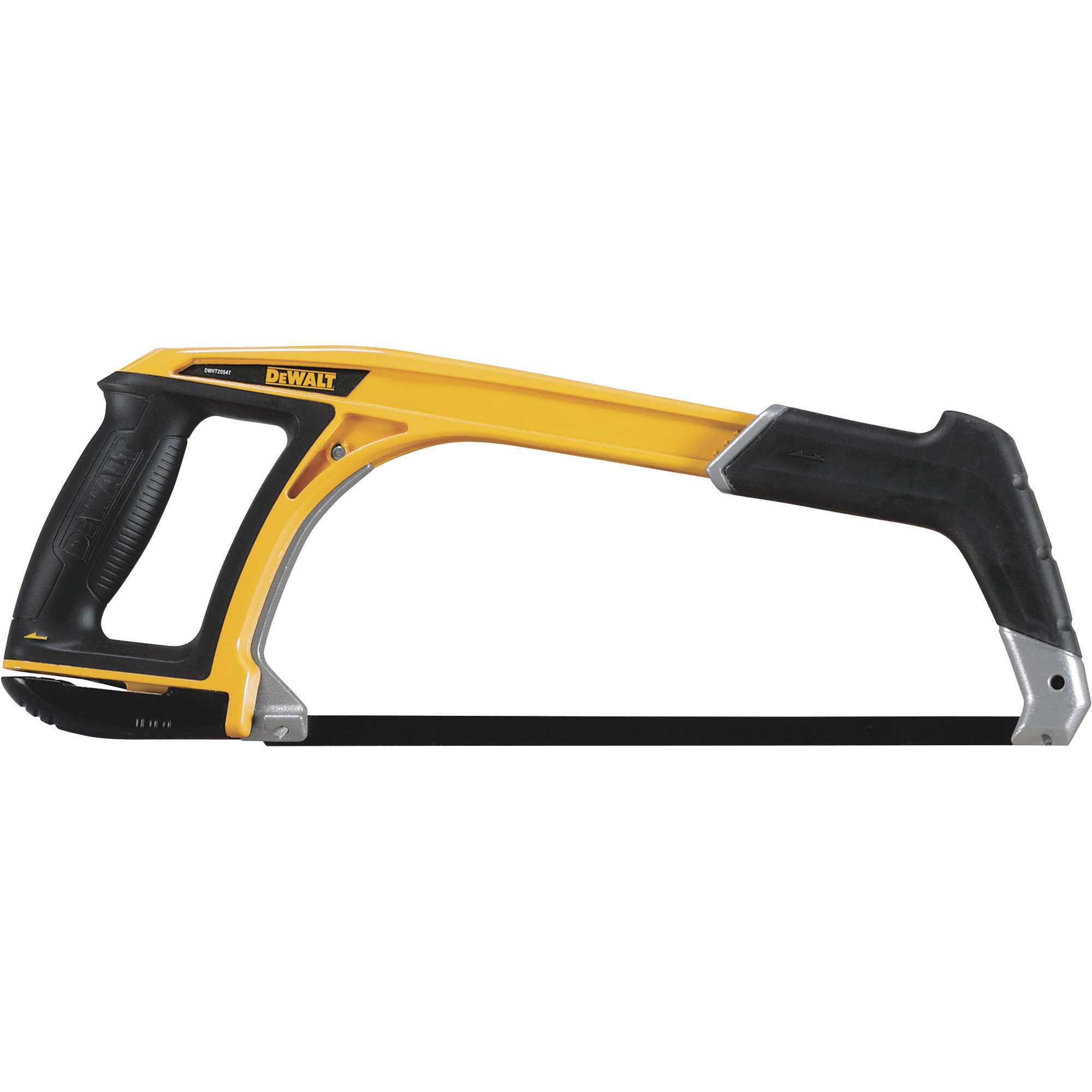
Who it’s forOne frame, five working modes: a standard 12-inch hacksaw, a 45-degree mounting for flush cuts, a low-profile configuration for tight spaces, and a jab-saw setup where the front section comes off and the blade mounts to the handle. Blade tension goes up to 330 pounds, the highest of the multi-position saws here. Price has ranged from about $20 to around $38 in recent listings.
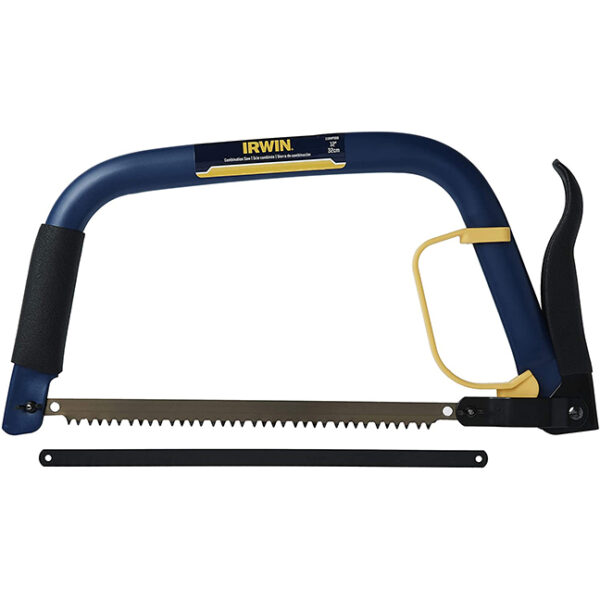
Who it’s forThe 218HP300 is a two-in-one: the frame works as a 12-inch hacksaw for metal and as a bow saw with a wood-cutting blade. The 6-inch throat gives it more reach than a typical closed hacksaw frame, and a full hand guard sits between your knuckles and the work. It is a niche design, but handy when metal and wood cutting share one toolbox slot. Typical price is about $30.
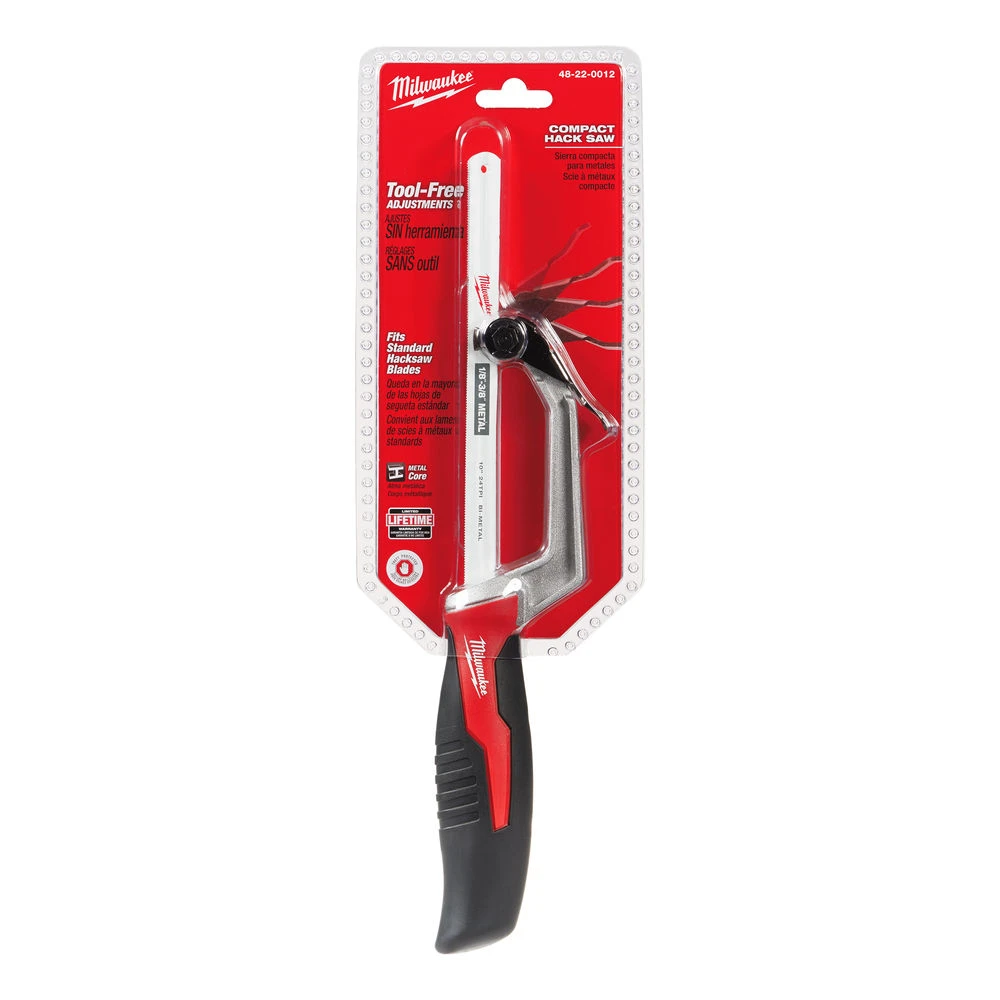
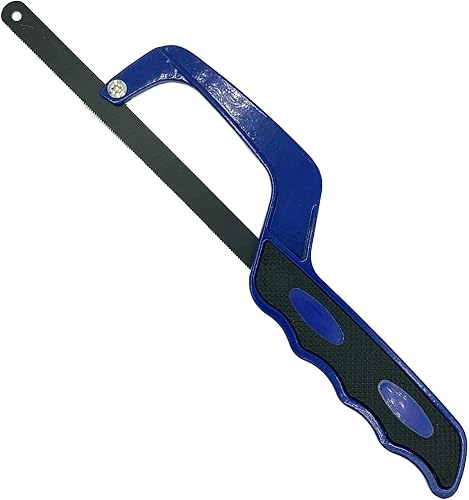
Who it’s forThis is the one-hand option: a compact frame built for cutting copper tubing, bolts, and small PVC where a full-size saw is overkill. The blade changes without tools, and the blade length adjusts so you can shorten it for flush cutting. It ships with a 10-inch 24-TPI blade and a rubber overmold grip. Typical price is about $18.
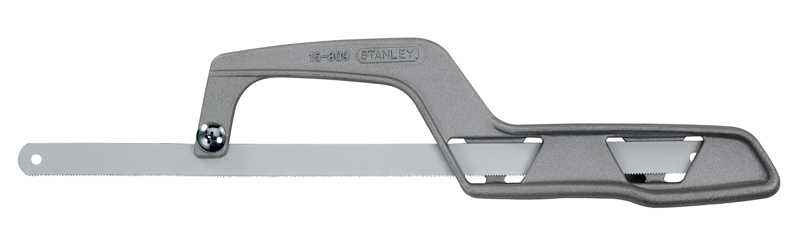
Who it’s forThe 15-809 is a jab-style mini saw: a lightweight cast-aluminum handle grips a 10-inch 24-TPI bi-metal blade, and the handle shape shields your hand from the teeth. It is made for tight spaces and narrow crevices — trimming in place, cutting drywall or plastic pipe where a framed saw will not fit. Typical price is about $10 to $13.
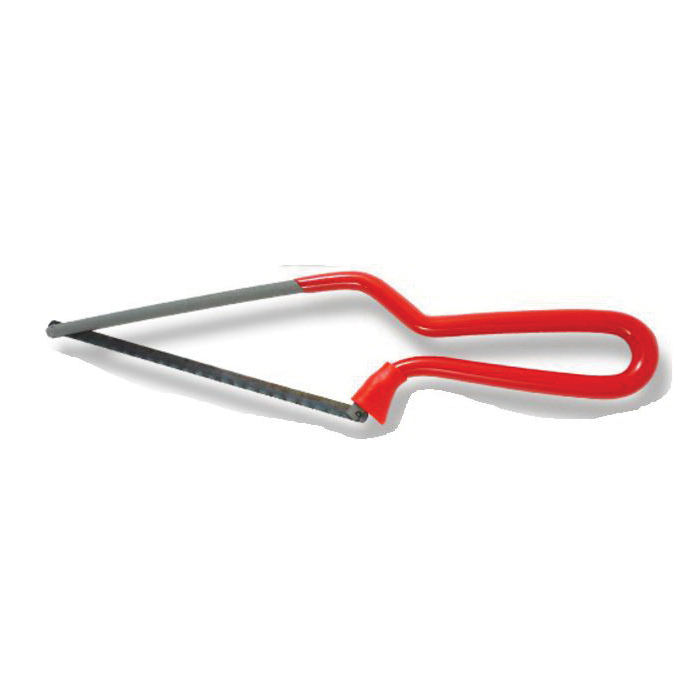
Who it’s forWhen the job is inside a cabinet or under a sink, the Tiny Tim’s loop of steel tubing with a vinyl grip goes places framed saws cannot. It uses a 6-inch blade with 32 teeth, a fine pitch that suits thin steel and brass. Replacement 6-inch blades are sold in multi-packs, which is worth knowing since hardware stores stock them less often than 10- and 12-inch blades. Typical price is about $10.
Who it’s forThe FEENIX is the lowest-priced saw in this group: a slim aluminum handle with a 10-inch 24-TPI bi-metal blade for cutting in tight spots. It uses the same common 10-inch blade size as the other mini picks, so replacements are easy to find. Last observed price was about $8.
A hack saw is a frame, a blade, and a way to tension the two. Get those three right and the cutting takes care of itself.
High-tension versus standard frames
A high-tension frame stretches the blade taut enough to ping when plucked — typically rated from 225 pounds up to 50,000 PSI on the stiffest frames. That stiffness keeps the blade from wandering, so cuts track straighter and blades break less often. Standard tubular or flat-bar frames cost less but flex under load, which shows up as crooked cuts and snapped blades on harder stock. For anything beyond an occasional cut, a high-tension frame earns its keep.
TPI: match the teeth to the metal
Tooth count is teeth per inch (TPI), and the rule of thumb is to keep at least three teeth in contact with the material. Thick metal and bar stock cut best with coarse 14- to 18-TPI blades, which clear chips quickly. Medium stock is the home of the 24-TPI blade that ships with most saws here. Thin sheet metal, tubing, and conduit need fine 32-TPI blades — a coarse blade will snag and strip teeth on thin material. Plastic cuts cleanly with 18- to 24-TPI blades.
Blade changes and tensioning
Good blade changes take seconds: release the tension knob, hook the blade holes over the frame pins with the teeth pointing away from the handle, then turn the knob until the blade is taut. A properly tensioned blade makes a clear ping when plucked. Wing-nut tensioners work but can slip mid-cut; a large, knurled tension knob holds settings better and is easier on the fingers.
Compact and mini hacksaws
When a full frame will not fit, compacts take over. Pistol-grip compacts use 10-inch blades with tool-free changes. Jab-style minis put the handle directly on the blade. Loop-handle minis like the Tiny Tim use 6-inch blades and go almost anywhere. The tradeoff is stroke length: a short frame cuts slower and needs more strokes for the same cut, so keep a mini as a second saw, with a full-size frame for the main work.
Flush-cut positions
Many saws mount the blade at more than one angle. A 45-degree or 180-degree position lets the blade run flat against a surface to trim bolts, dowels, or pipe flush with the work. Dedicated jab-saw modes go further: the frame comes apart and the blade mounts to the handle alone for cuts inside walls and cabinets.
What to avoid
Skip frames that visibly flex when you squeeze the handles — a bending frame cannot hold tension, and the blade will wander. Be wary of weak tension controls: undersized wing nuts and slipping knobs let the blade slacken mid-cut, which is when teeth strip. Match the TPI to the work: a coarse blade on thin sheet metal snags and ruins the blade. Finally, check blade size before you buy a mini. 10- and 12-inch blades are stocked everywhere; 6-inch blades are easy to order online but harder to find in a local store.
Specifications are based on published manufacturer and retailer information for the listed models. Check the current product listing for package contents and compatibility before ordering.