From dedicated bench grinders to a nine-dollar rotary guide, these are the tools that put a working edge back on dull mower blades — plus the balancer that keeps a freshly sharpened blade from shaking the deck apart.
Last updated: September 2026
We may earn a commission if you buy through our Amazon links. It does not change what you pay or how the tools are ranked.
How we sized them up
This is a spec-led shortlist built from published specs and retailer listings. We compared sharpening method, angle control, power source, blade compatibility and price. For most DIYers, a repeatable angle matters more than raw grinding power — a 30-degree bevel you can hit every time beats a faster wheel you have to eyeball. For the mower itself, see our guide to the best electric lawn mowers.
The quick cut
Start with how you sharpen: guided jig, bench grinder, rotary tool or by hand. Tap any pick to jump straight to the full breakdown.
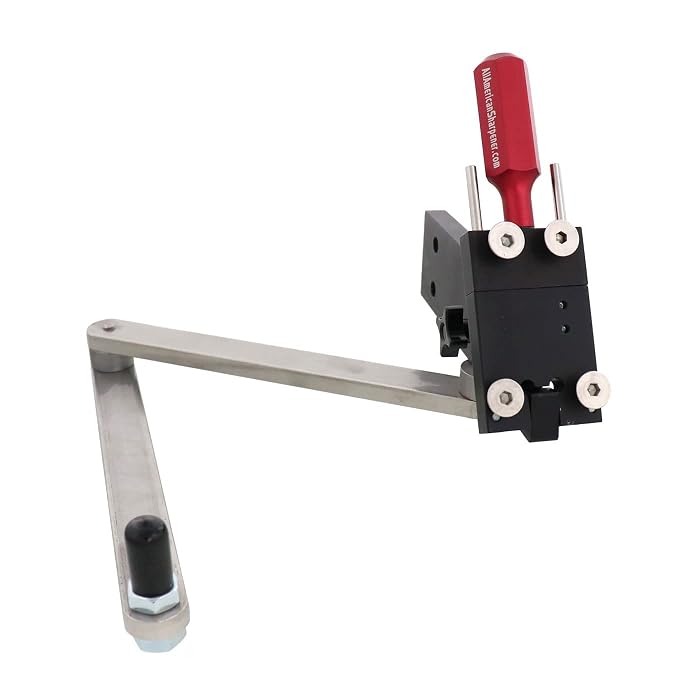
All American Sharpener Model 5005 Gen 2 — 15°–45° Adjustable Lawn Mower Blade Sharpener
ASIN: B07YM2RRN6
Product image: Amazon product media.
The All American Sharpener is a bench-mounted jig that turns your own 4½-inch angle grinder into a dedicated mower-blade sharpener. The blade clamps into the pivoting vise head, the grinder locks into an articulating arm, and a protractor scale sets the bevel angle anywhere from 15 to 45 degrees. It handles standard, mulching and high-lift blades, left- and right-hand, and sets up in a vise or bolted to a bench. Expect to pay around $199, plus a grinder you may already own.
Angle range
15–45°
Grinder needed
4½-in. angle grinder (sold separately)
Blade types
Standard, mulching, high-lift; left- and right-hand
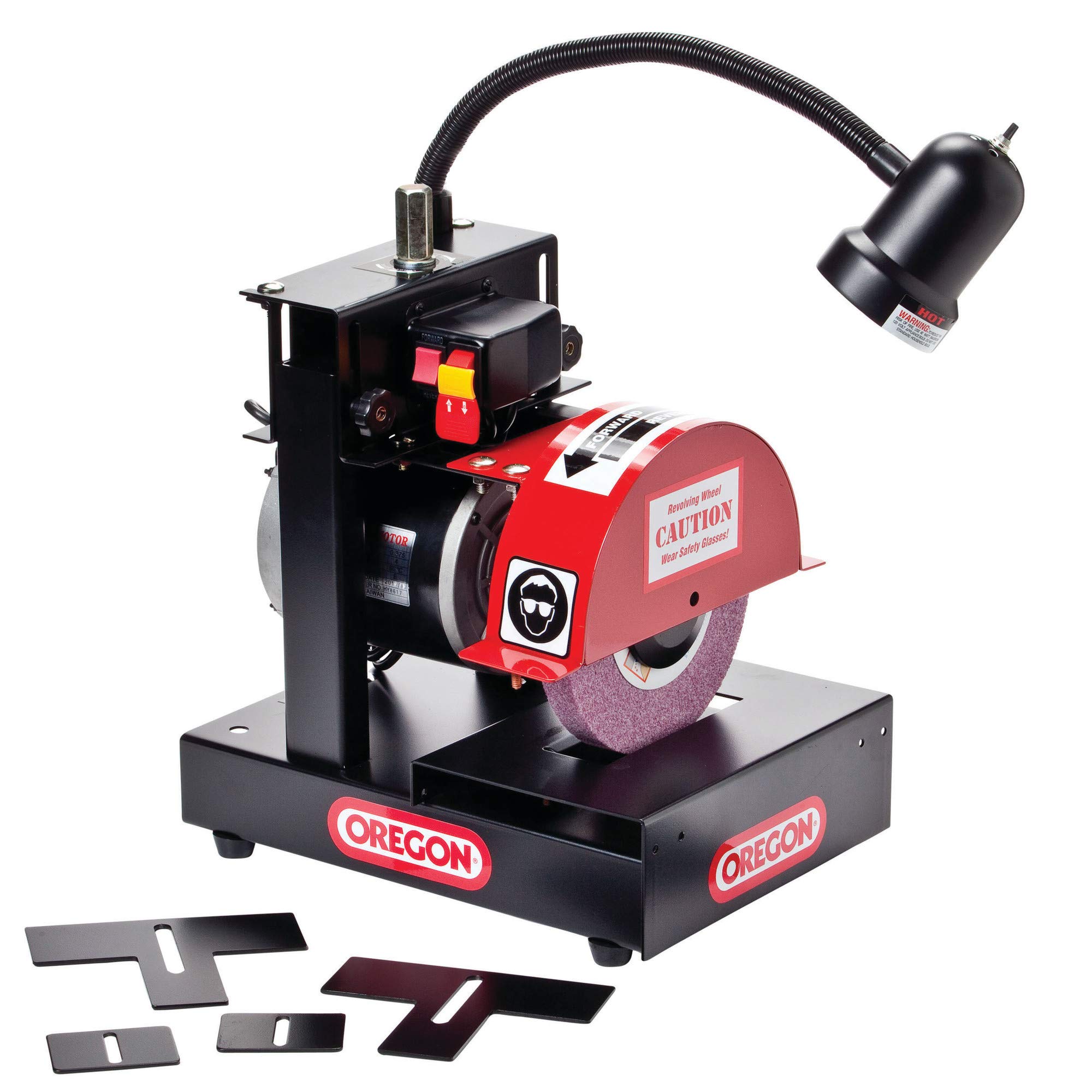
Oregon 88-023 Professional Blade Grinder — ½ HP Reversing Bench Grinder with Light
ASIN: B000B8L62W
Product image: Amazon product media.
The 88-023 is Oregon’s shop-grade answer to dull blades: a ½ HP, 1750 RPM bench grinder with an 8-inch stone, a reversing switch that covers left- and right-hand blades, a height-adjustable work light and a kill switch for safety. It handles up to a 6-inch cutting edge and the whole unit is built heavy enough to stay put while you grind. It is the most expensive way to sharpen a mower blade on this list, commonly listed around $900, but it is the machine a landscape shop would buy.
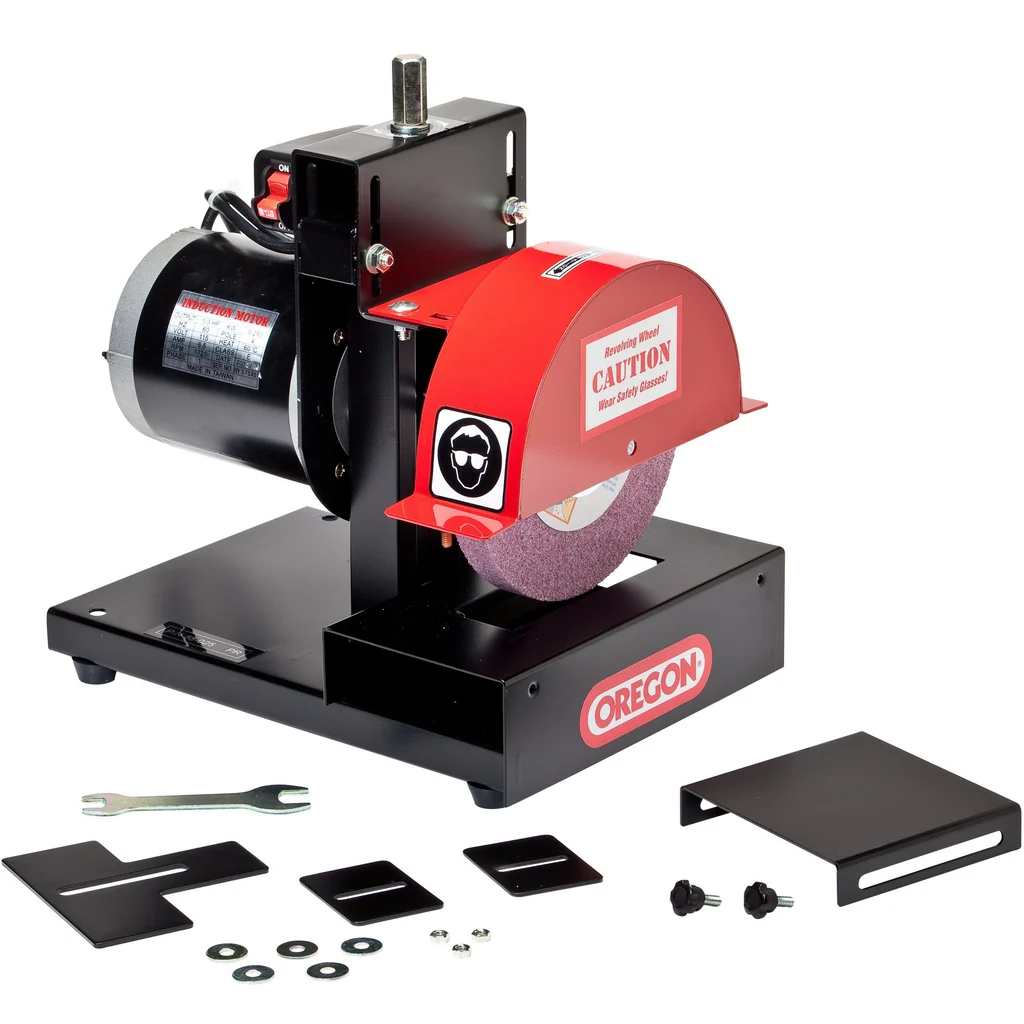
The 88-025 gives you most of the 88-023’s grinding muscle at a much lower price. A ⅓ HP motor spins an 8-inch stone at 1750 RPM, and the open design will sharpen a cutting edge of any length. The tradeoff is single-direction grinding — it is set up for right-hand blades only — and there is no work light included. With a safety kill switch and a price commonly around $600, it is the sensible bench-grinder pick for a home garage that sharpens blades a few times a season.
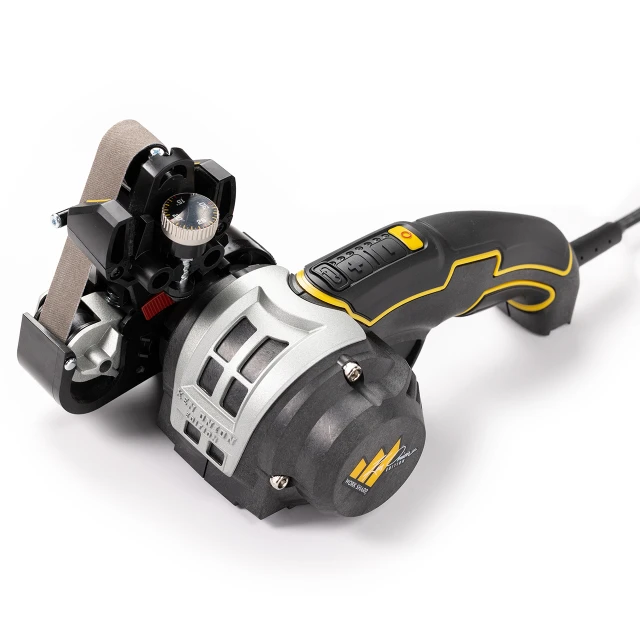
Work Sharp Ken Onion Edition Mk.2 (WSKTS-KO2) — 7-Speed Flexible-Belt Sharpener
ASIN: B0CXG57C4F
Product image: retailer product photo.
The Ken Onion Mk.2 sharpens with flexible ¾- by 12-inch belts that run cooler than grinding wheels, which means less risk of taking the temper out of a blade. Seven speeds, guides adjustable from 15 to 30 degrees, a blade-grinding attachment for longer blades, and five belts from P120 to 6000 grit make it a sharpening station for everything in the toolbox — mower blades included. Around $170 with a 4.7-star average across thousands of reviews, it is the most versatile powered sharpener on this list.
Tormek T-4 Original — Water-Cooled Sharpening System with Leather Honing Wheel
ASIN: B00N0VJ90S
Product image: retailer product photo.
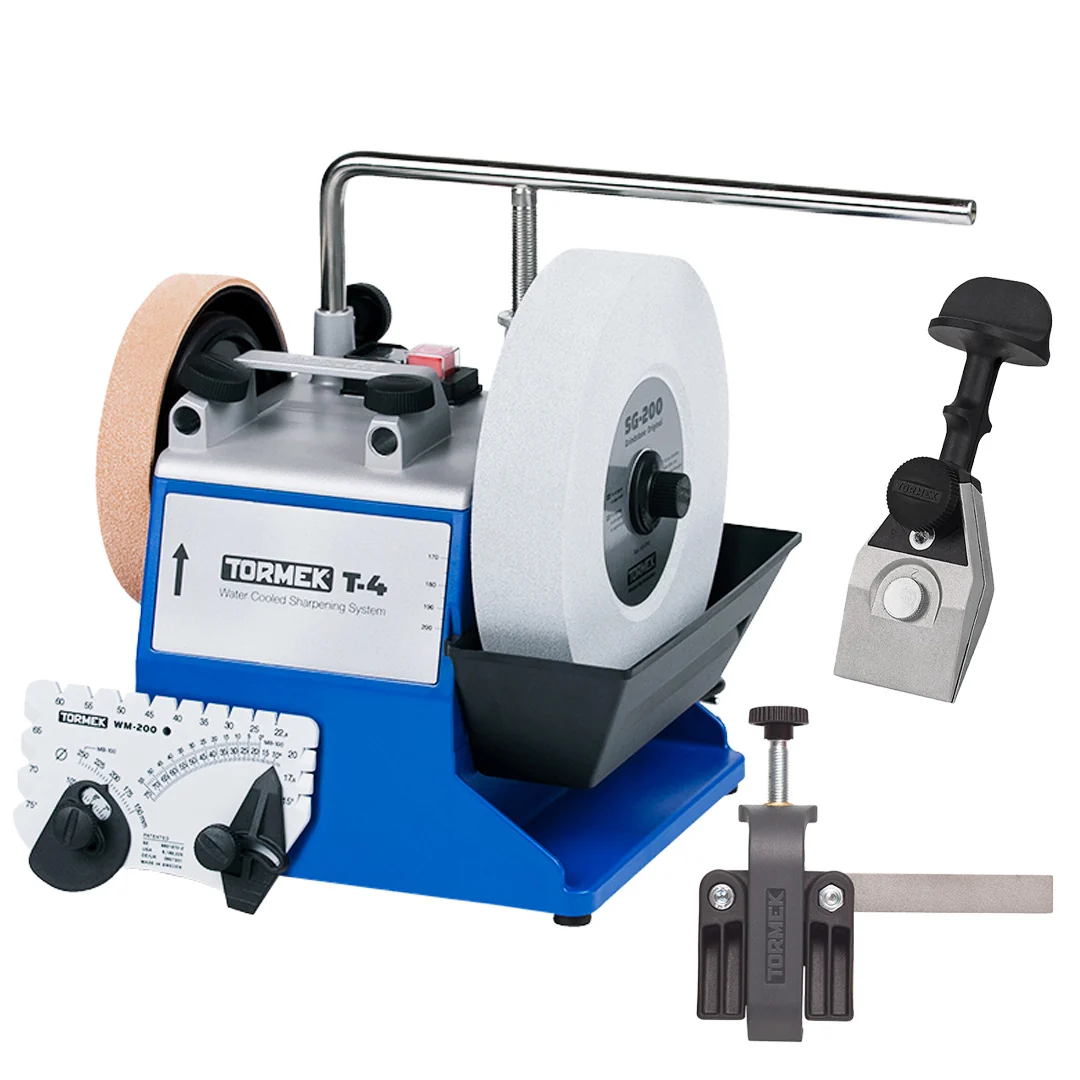
The T-4 is the premium route: an 8-inch grindstone running at just 120 RPM through a water trough, so the blade never gets hot enough to lose its temper. A leather honing wheel polishes the edge after grinding, and Tormek’s jig system sets exact angles — a knife-and-axe jig setup makes a fine bevel repeatable. Around $600 with a 7-year warranty, it is slow, deliberate and overbuilt. Mower blades ride freehand on the universal support, so it rewards patience more than any other pick here.
Dremel A679-02 Sharpening Attachment Kit — 10-Piece Kit with Mower, Garden and Chainsaw Guides
ASIN: B003BIFMK6
Product image: retailer product photo.
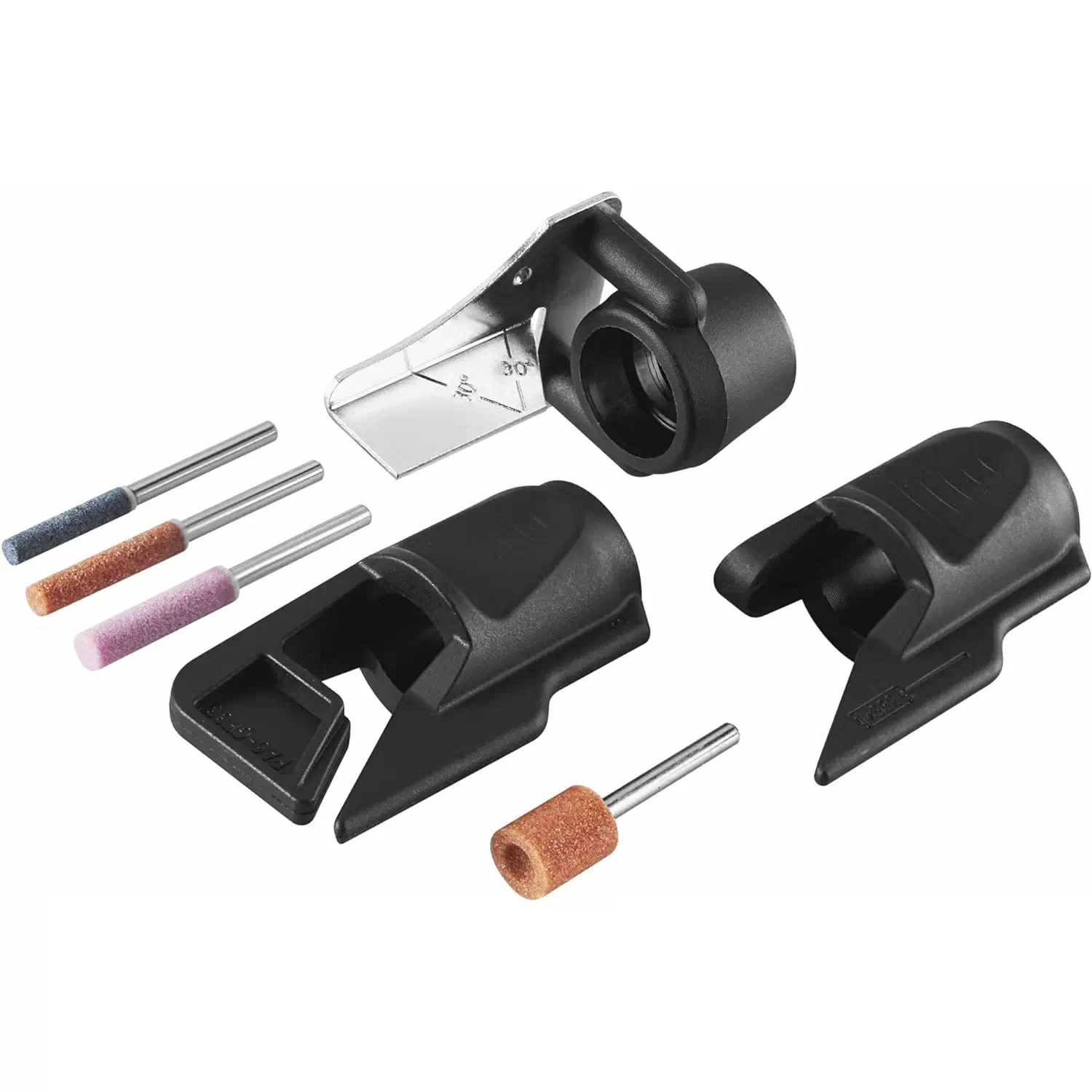
The A679-02 turns a Dremel rotary tool into a sharpening station for around $20. Screw-on guides set the angle for lawn mower blades, garden tools and chainsaw cutters, and the 10-piece kit includes 453, 454, 455 and 932 grinding stones to match. It is the cheapest way into powered sharpening, and it lets you dress up a blade’s edge without pulling the blade off the mower. Typical rating is 4.6 stars; you supply the rotary tool.
WEN RTA001 Blade Sharpening Guide — 30° Guide with Grinding Bit for Rotary Tools
ASIN: B0F1DL6Z13
Product image: manufacturer product photo.
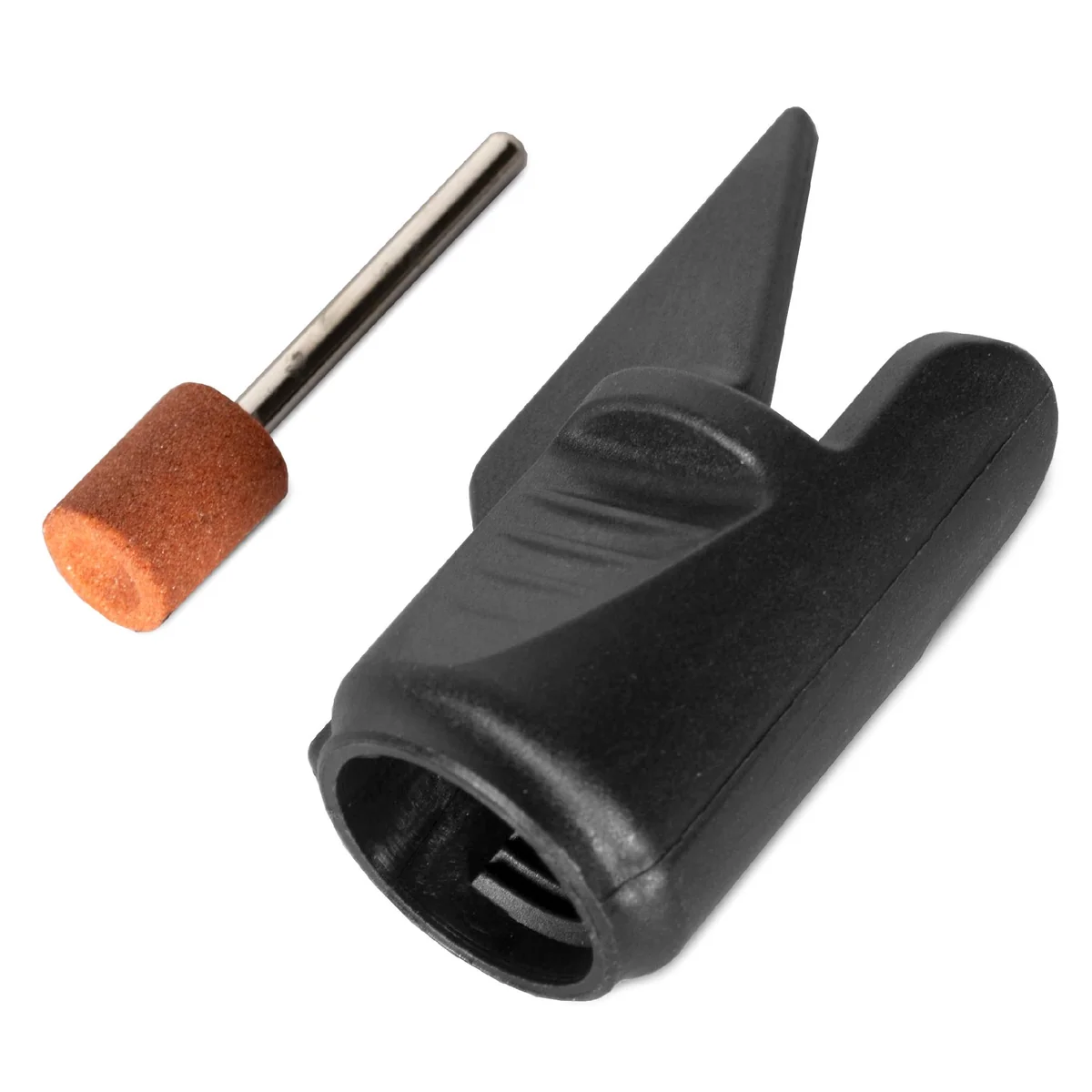
Nine dollars buys a guided angle. The RTA001 is a glass-filled nylon guide that screws onto any rotary tool with an M19-2.0 accessory thread — most WEN and Dremel models plus the majority of the market — and holds the bit at a 30-degree sharpening angle. A 1/8-inch shank, 3/8-inch diameter aluminum-oxide grinding bit is included in the box. It works on mower blades, loppers and shears. The angle is fixed at 30 degrees and it will not chew through badly nicked blades quickly, but for touch-ups it is the best value on this list.
Angle
30° fixed
Grinding bit
⅜-in. aluminum oxide, ⅛-in. shank (included)
Fit
M19-2.0 thread rotary tools (tool sold separately)
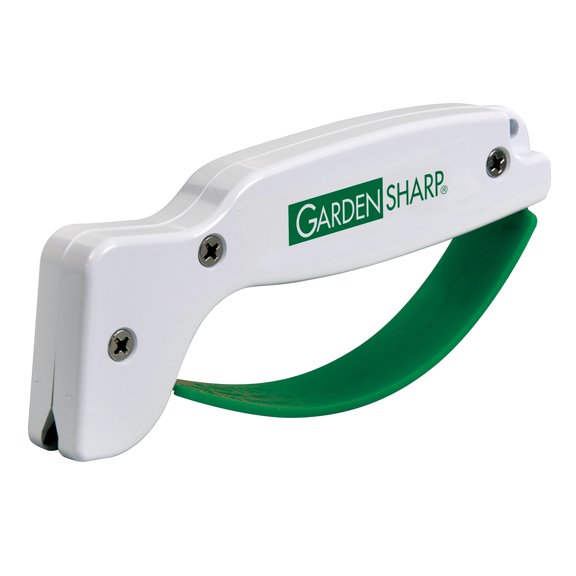
The GardenSharp is the two-minute fix. Draw a dull mower blade through the diamond-honed tungsten-carbide blades and it puts a working edge back with no power, no setup and no jig. The carbide cutters are reversible for double the life, and the ergonomic handle with an integrated finger guard keeps your hand clear of the edge. Around $12, it is the pick for mid-season touch-ups between full grinding sessions; badly nicked or bent blades still need a grinder.
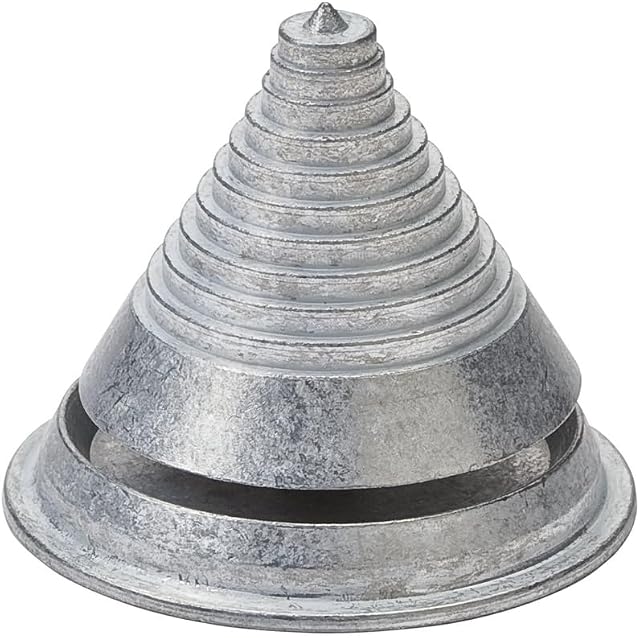
Every sharpening method on this list should end with a balance check, and the 42-100 is the tool for it. This zinc die-cast cone balancer sits under the blade’s center hole: if one side drops, more metal came off that side, and the vibration you feel on the handle starts there. It also reveals a bent blade, which no amount of sharpening will fix. Around $8, it is the cheapest insurance on the list — sharpen the blade, balance it, then bolt it back on.
Type
Cone blade balancer
Material
High-quality zinc die-cast
Fit
Universal — all lawnmower blades
Use
Verifies balance and detects bent blades after sharpening
Crescent Nicholson 10" Mill Single Cut Bastard File (08642NN) — Traditional Blade Touch-Up File
ASIN: B07YD6JRRP
Product image: retailer product photo.
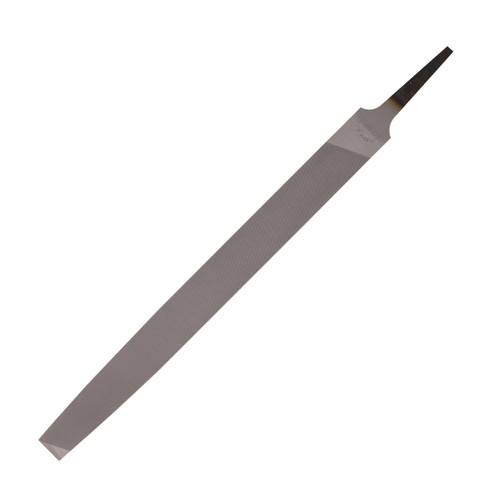
The mill file is the original mower-blade sharpener: a 10-inch single-cut bastard file that draws metal off the bevel by hand, with no heat and no power. The single-cut tooth pattern gives good control and a clean surface, and Nicholson’s file line has been a workshop staple for decades. Around $13. It is the slowest option here and it rewards a steady hand, but it works anywhere — no outlet, no grinder, no setup. A handle is sold separately.
A mower blade cuts cleanest at roughly a 30-degree bevel, and the sharpener you pick should hold that angle for you. Jigs like the All American and the Oregon grinders do it by design; guided belts and rotary guides get you close. Freehand grinding works, but every pass you eyeball is a pass that can drift.
Powered or hand
A season’s worth of nicks and dings needs a grinder or a belt to remove enough metal in a reasonable time. Handheld carbide sharpeners and mill files are for touch-ups on blades that are already close. If the edge is wavy or the blade is badly nicked, start powered.
Balance after sharpening
An unbalanced blade vibrates, cuts unevenly and wears the spindle bearing. Whatever sharpener you buy, finish with a balance check like the Oregon 42-100. Take a little more off the heavy side, check again, and repeat until the blade sits level.
Blade sharpening removes metal. Wear eye protection, keep fingers clear of the edge, and let grinding wheels and belts remove metal in light passes. Holding the blade against the abrasive until it discolors ruins the temper. Always check the blade for cracks or bending before you reinstall it, and follow the mower maker’s instructions for blade torque.