From full-size 12-inch sliding saws for deck and trim work to cordless models and a budget 10-incher that covers the basics, these picks cover the setups that actually make sense in a garage, basement shop or work trailer.
Last updated: September 2026
We may earn a commission if you buy through our Amazon links. It does not change what you pay or how the tools are ranked.
How we sized them up
This is a spec-led shortlist built from published specs and retailer listings. We compared blade size, bevel type, sliding versus fixed head, crosscut capacity, power source, cutline guides, dust collection and portability. For most DIYers, a fence and miter scale that stay true and a saw that fits the bench matter more than chasing the highest no-load RPM. For edge profiles and joinery after the crosscut, see our guide to the best wood routers.
The quick cut
Start with the use case, then check the crosscut capacity and bevel type. Tap any pick to jump straight to the full breakdown.
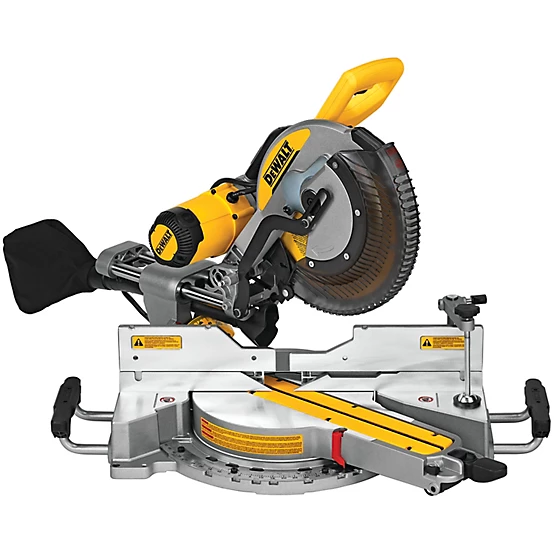
Who it’s forThis is the easy first choice when one miter saw has to handle framing, deck boards and trim. The 12-inch dual-bevel sliding head crosscuts 2x14 lumber at 90 degrees, and the 15-amp motor runs at 3,800 RPM. Tall sliding fences support crown molding nested and baseboard stood vertically, which covers most of what a weekend remodel throws at you.
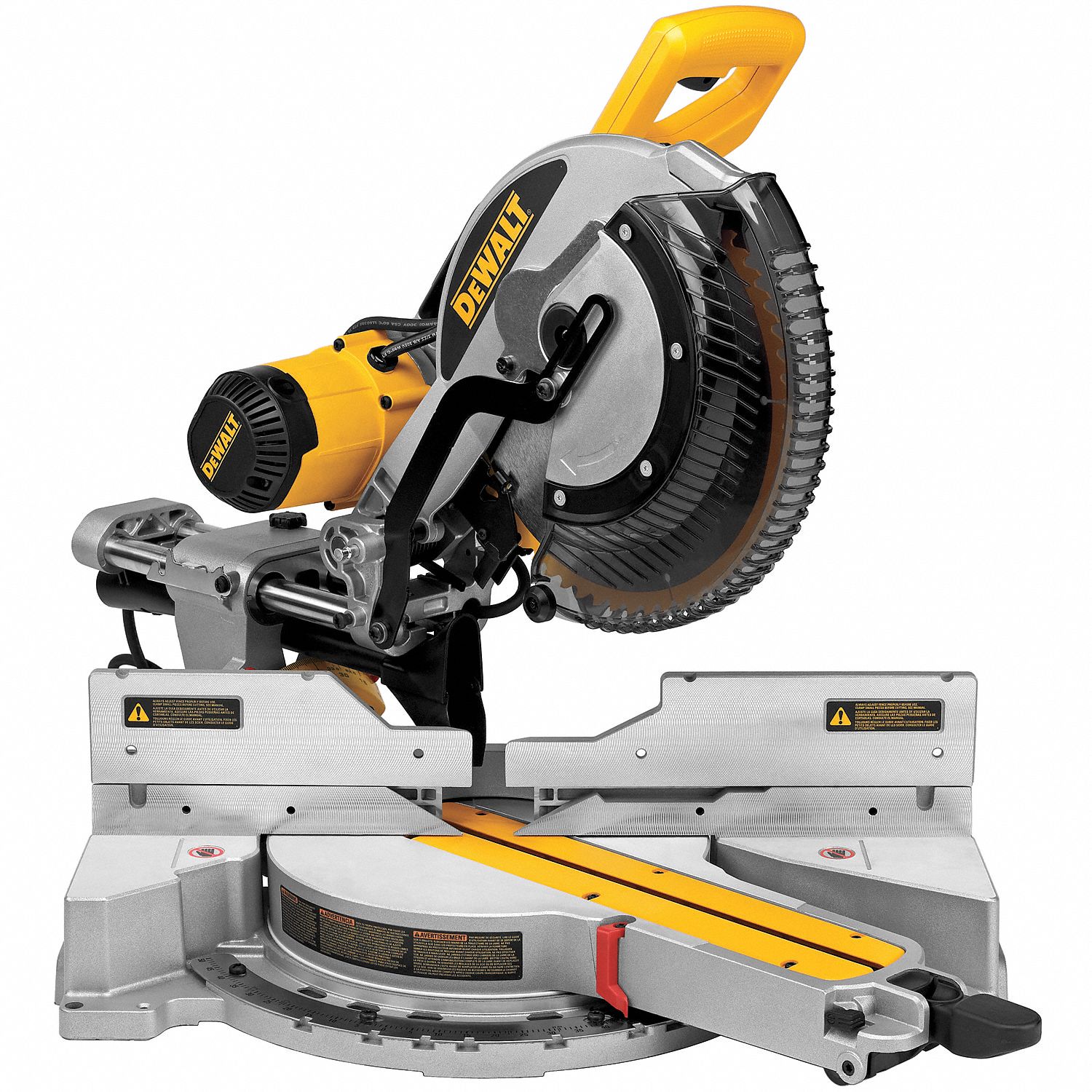
Who it’s forThe DWS780 is the DWS779 with DeWalt’s XPS cutline system added: an LED casts a shadow of the blade on the workpiece, so the cut line is visible without a laser that needs alignment. It also gets a higher-tooth blade and repeatable crown-molding bevel stops. It costs meaningfully more than the DWS779, but the cutline system is genuinely useful for trim work.
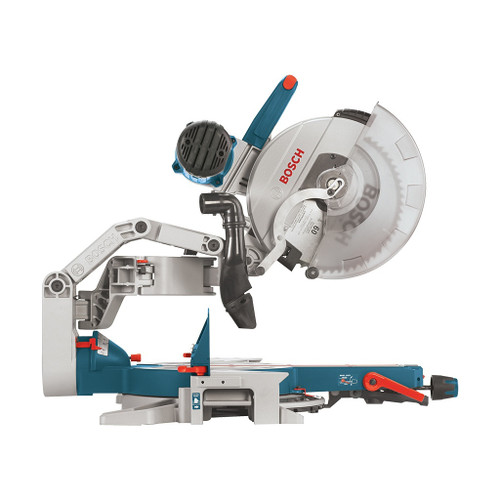
Who it’s forBosch’s Axial-Glide arm replaces the usual rear slide rails, so the head folds close to the back of the saw. That means you can run it nearly flush against a wall, which is a real advantage in a cramped garage. It offers a 14-inch horizontal crosscut and upfront bevel controls, plus square-lock fences that stay aligned.
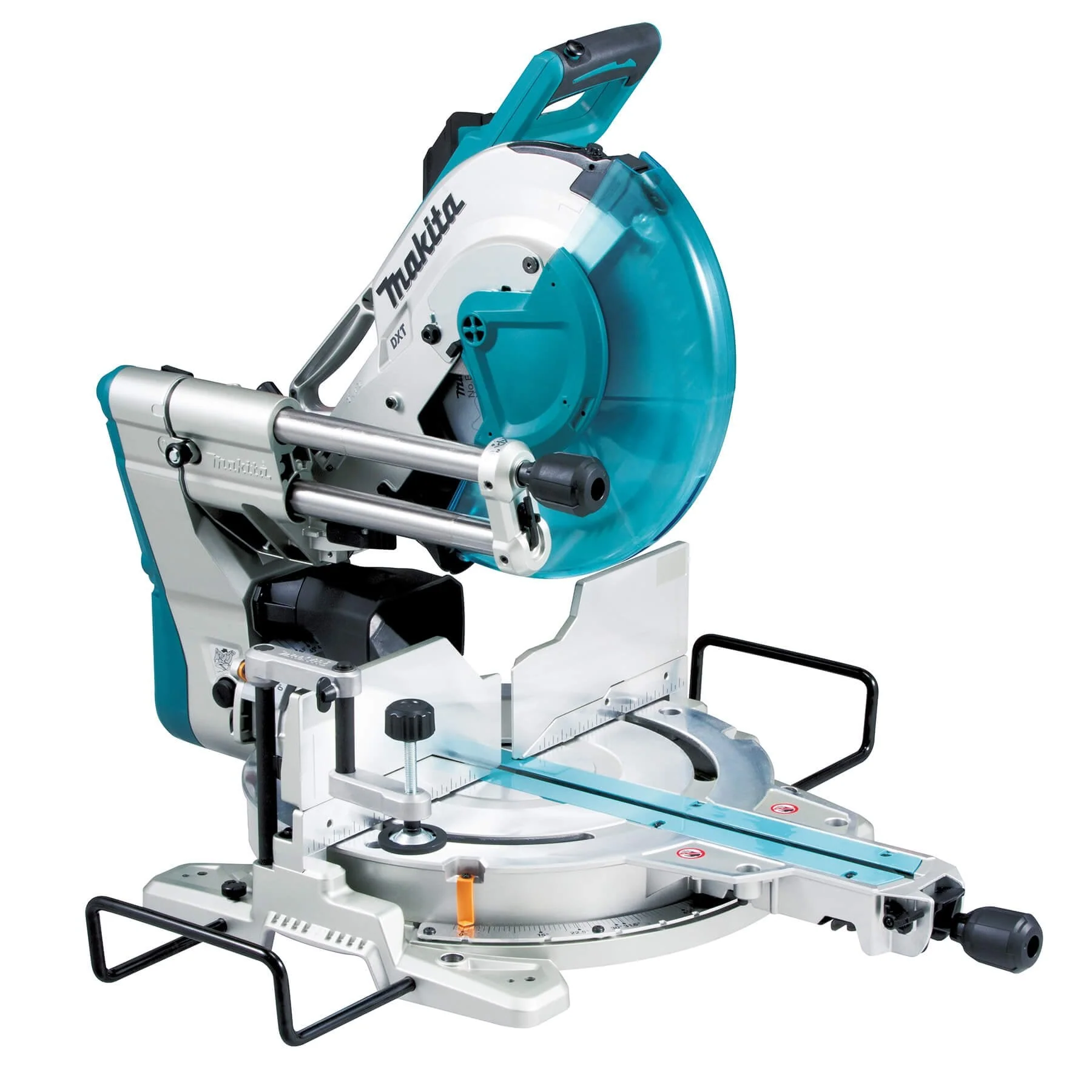
Who it’s forThe LS1219L crosscuts up to 15 inches at 90 degrees and handles 8-inch crown molding nested, which is more than the other 12-inch sliders here. Its direct-drive motor needs no belts, the bevel lock sits up front, and dual dust ports collect better than most. At around 65 lbs it is a two-person carry, so it suits a semi-permanent bench spot.
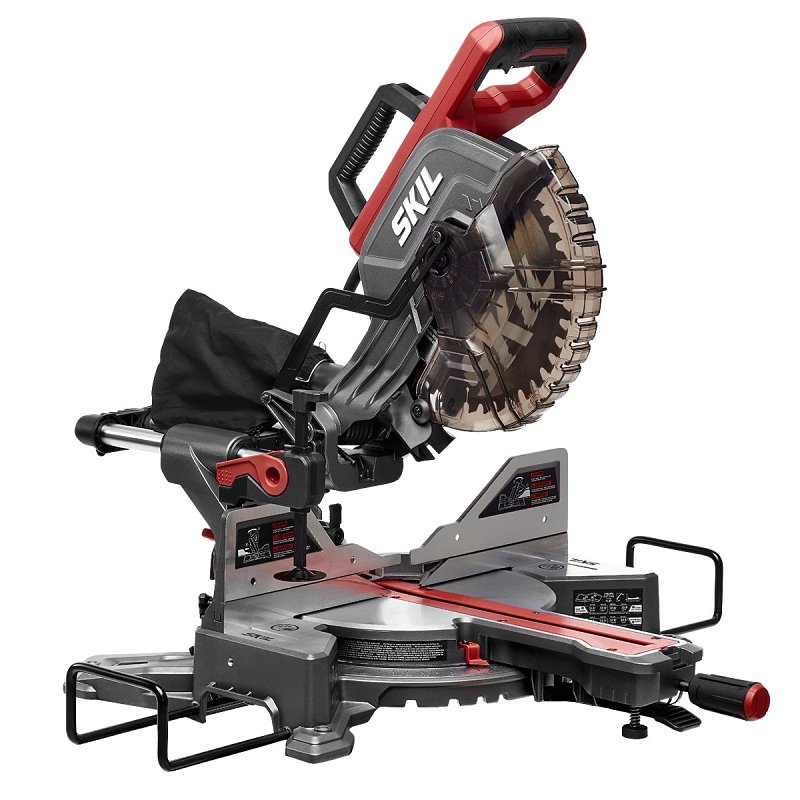
Who it’s forThis is the sliding saw to buy when a 10-inch blade is enough and the budget is tight. The 15-amp motor spins at 4,800 RPM, the head tilts both ways, and the LED shadow line marks the cut without a laser. It crosscuts 2x12 lumber at 90 degrees, which covers framing and most trim boards.
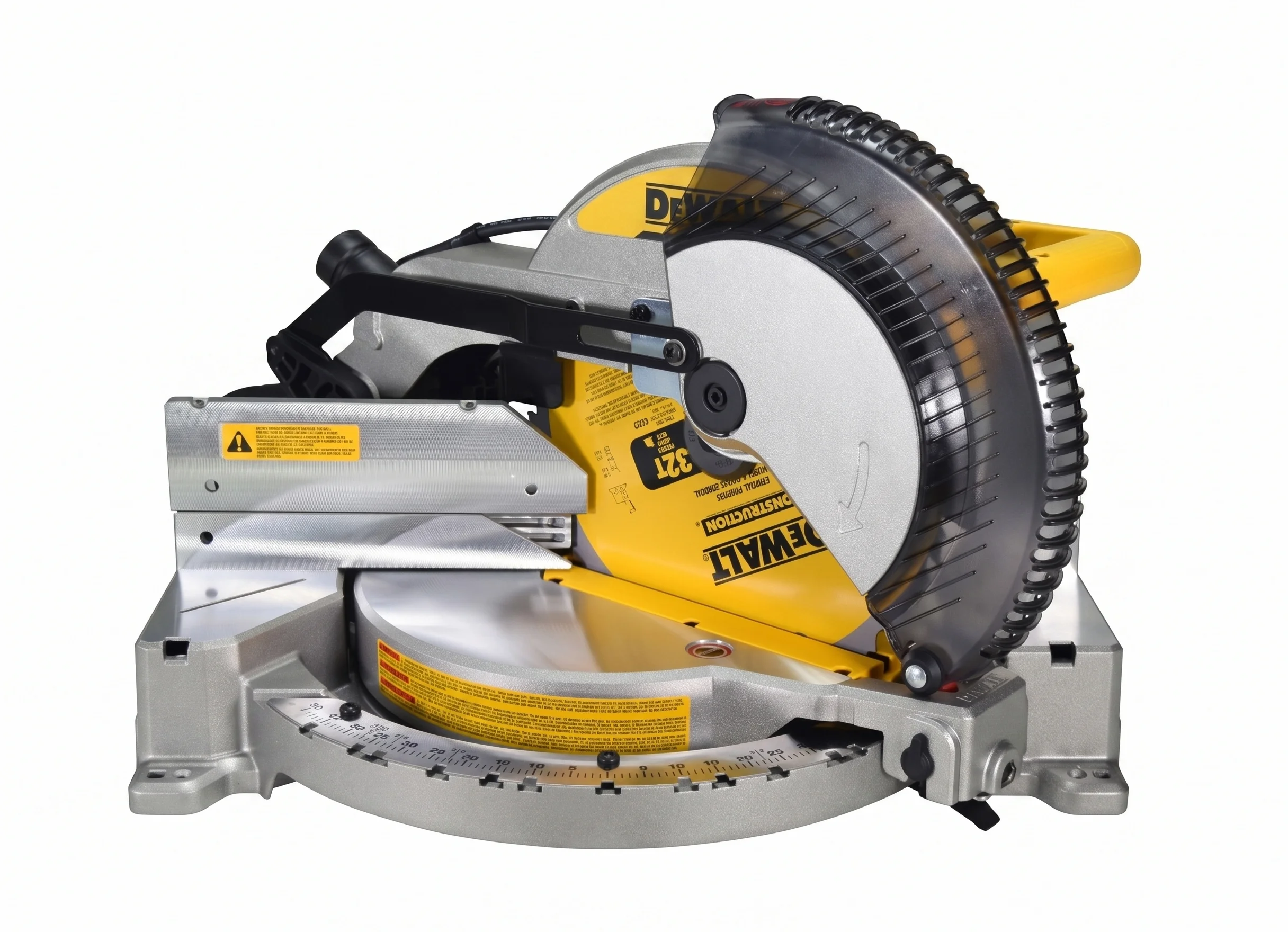
Who it’s forIf your work is mostly crosscuts and simple miters, the sliding mechanism is weight and complexity you do not need. The DWS715 is a straightforward 12-inch compound saw: 15 amps, 4,000 RPM, 2x8 crosscut at 90 degrees, and DeWalt’s stainless miter detent plate with 14 positive stops. It is lighter and simpler than the sliders here.
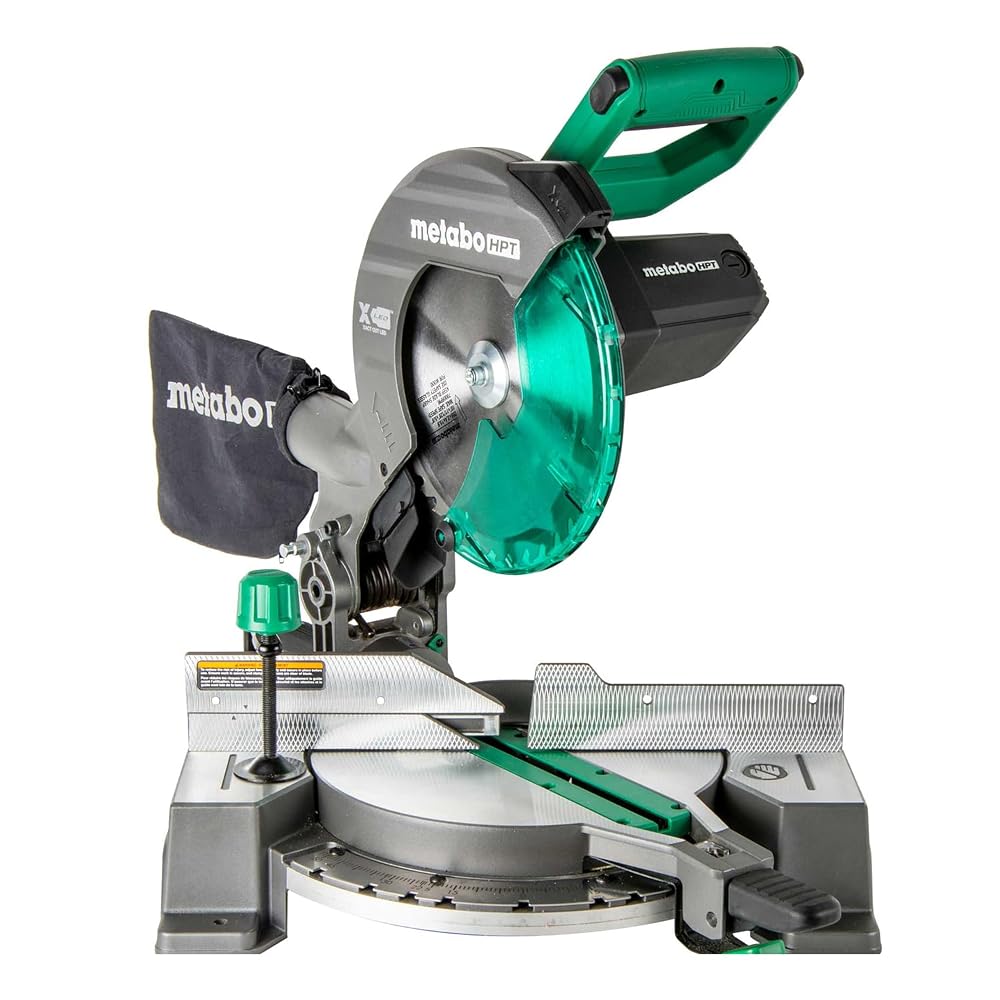
Who it’s forThis is the cheapest saw on the list and a sensible one to buy for a season of trim and deck work. It weighs just 24.2 lbs, runs its 10-inch blade at 5,000 RPM, and carries a 5-year warranty. The single bevel and fixed head keep capacity modest — 2x8 at 90 degrees — but it handles the basics cleanly.
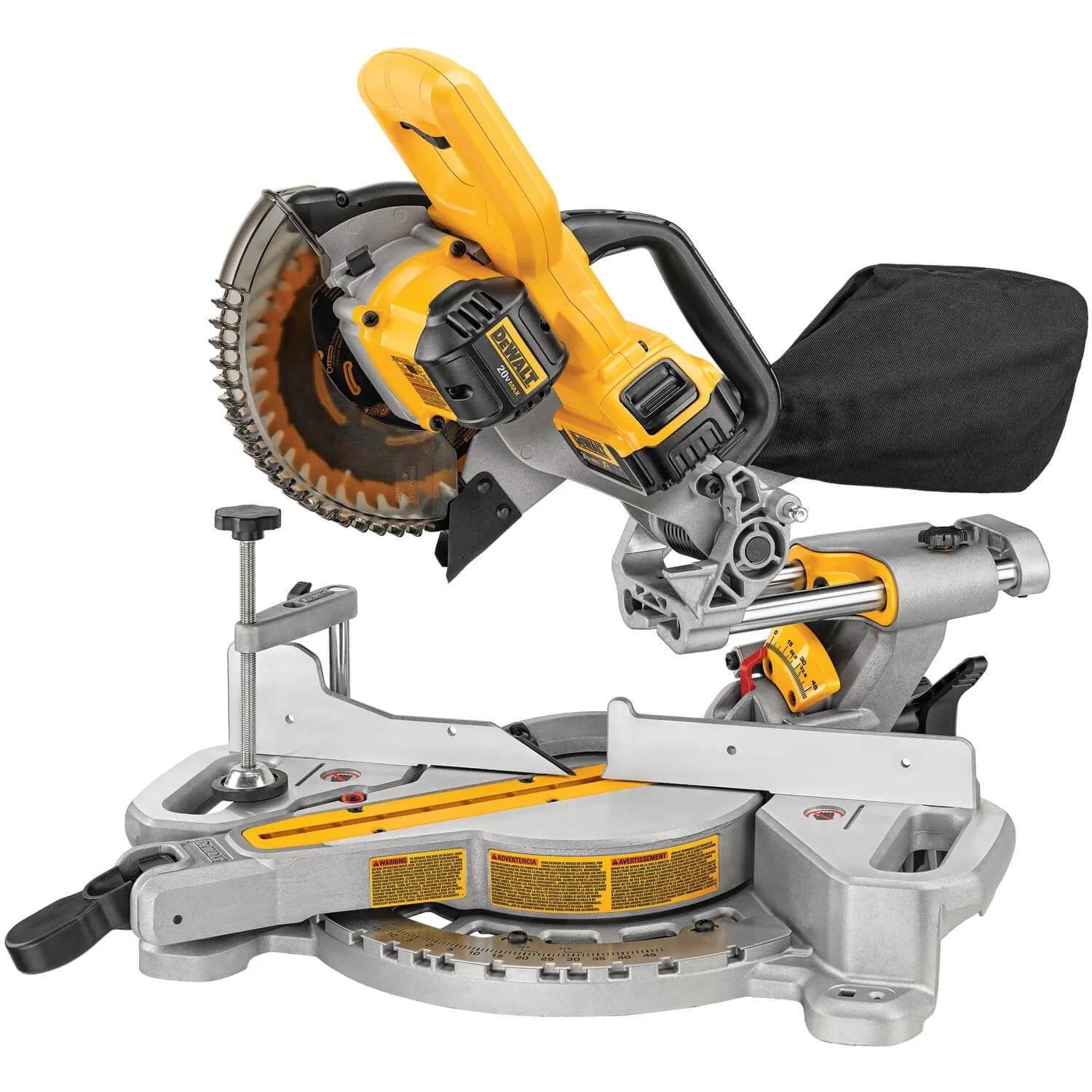
DeWalt 20V MAX 7-1/4-Inch Sliding Miter Saw Kit (DCS361M1)
ASIN B00X52TZYM
Product image: Wiselinetools retail listing.
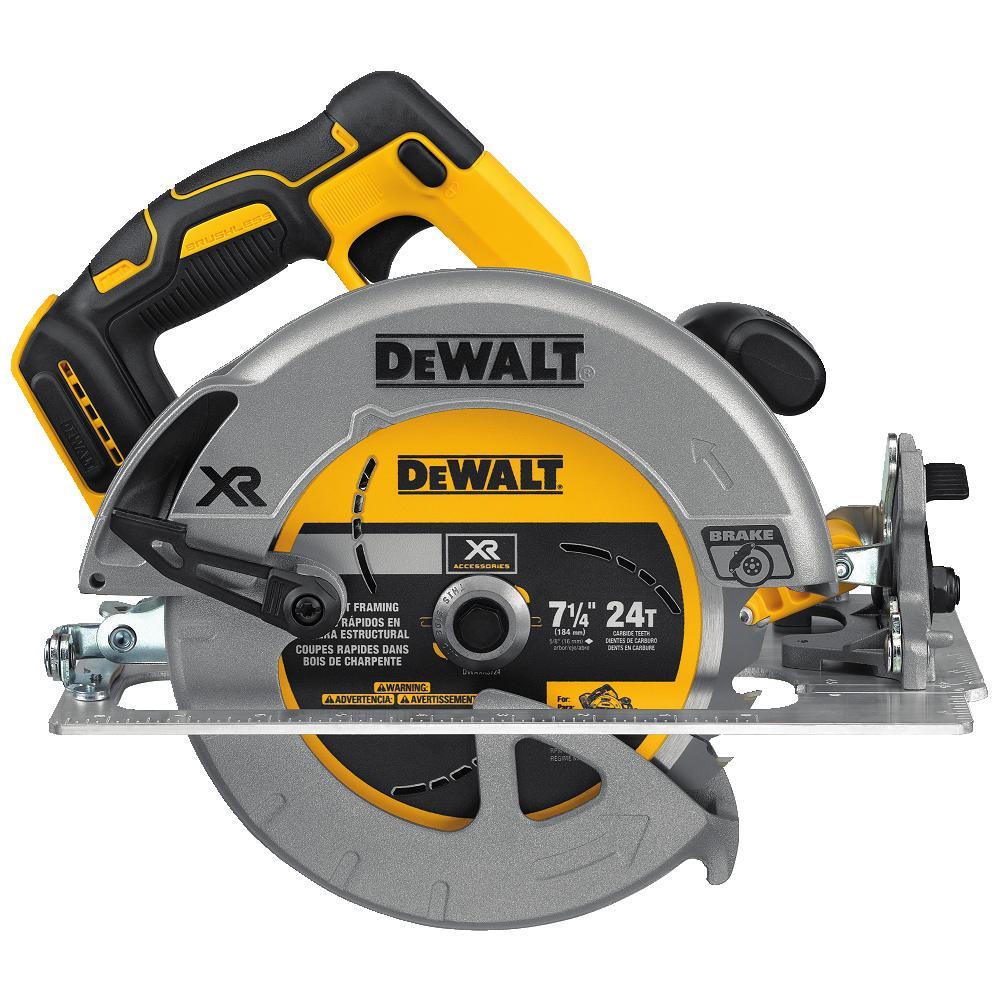
Who it’s forFor punch-list work and jobs where dragging a cord is a nuisance, this compact slider runs on DeWalt’s 20V batteries. The kit includes a 4.0Ah battery and charger. The 7-1/4-inch blade limits capacity to trim-size stock, so think baseboard, casing and small framing cuts.
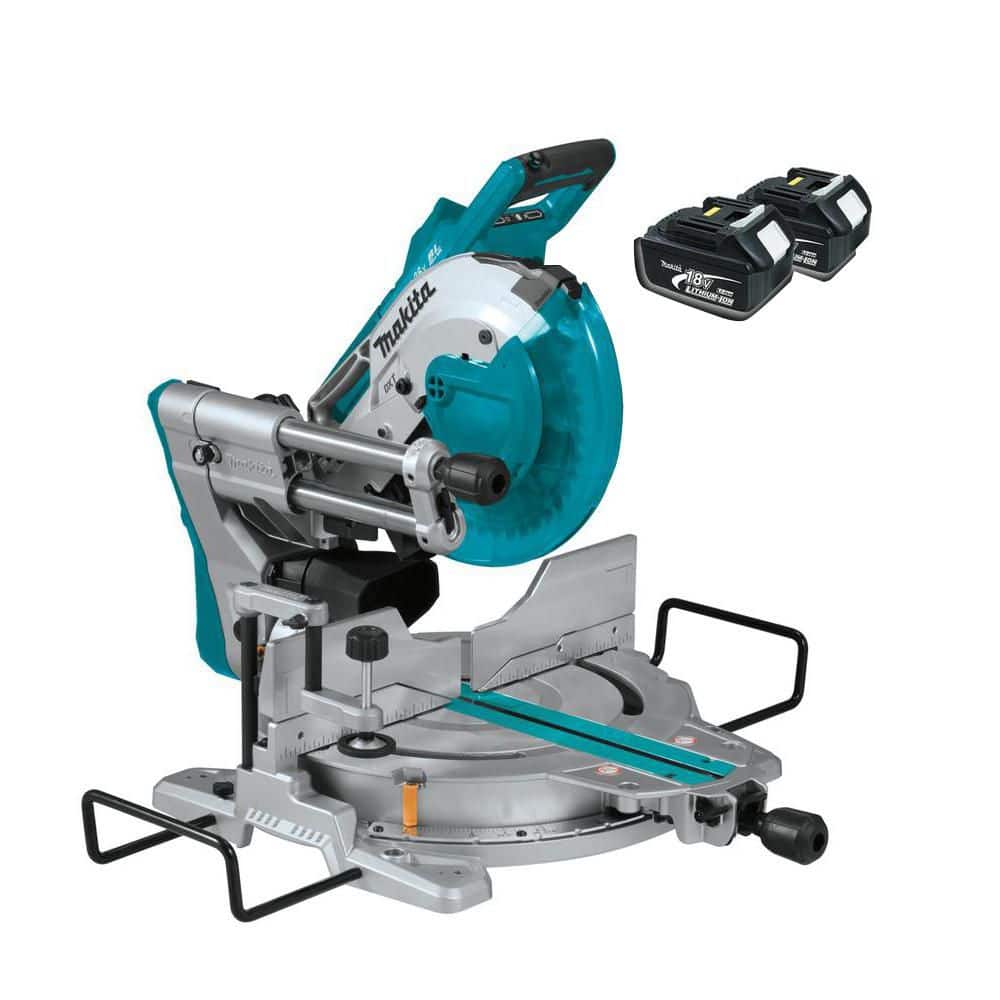
Who it’s forThis is the cordless answer for full-size work. Two 18V batteries combine for 36V, the brushless motor spins at 4,400 RPM, and it crosscuts a 4x12 at 90 degrees — real framing capacity without a cord. The kit includes two 5.0Ah batteries and a charger. It is the most expensive saw here, and it makes sense mainly if you are already on the Makita LXT platform.
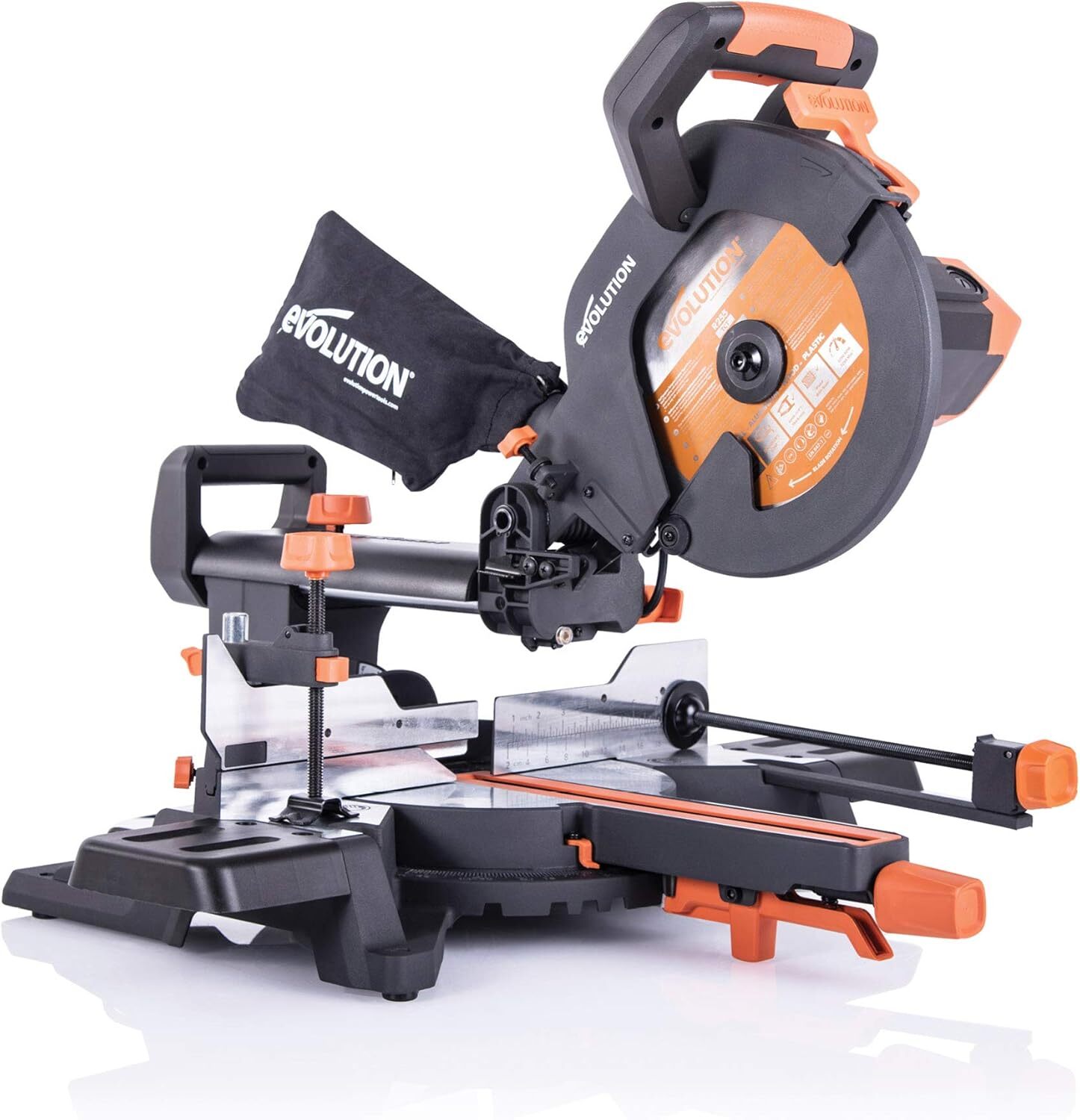
Who it’s forThis is the oddball in a good way. The included multi-material blade cuts wood, plastic and mild steel with the same blade, so a mixed project — timber and metal brackets, conduit and trim — does not need a blade swap. The slower 2,500 RPM motor and single-bevel head keep it specialized, but for mixed-material work nothing else here does the job.
Match the saw to the stock you cut and the bench you have.
Sliding head and bevel type
A sliding head roughly doubles the board width a saw can crosscut — a 12-inch slider handles 2x14 at 90 degrees while a fixed 12-inch head stops around 2x8. Dual bevel lets the head tilt both directions, which saves flipping long stock. If your work is mostly simple crosscuts, a fixed single-bevel saw is lighter and cheaper.
Blade size
A 12-inch blade offers more cut depth and broader blade choice. A 10-inch saw saves weight and cost, and is plenty for trim, decking and 2x lumber. A 7-1/4-inch cordless saw is strictly for trim-size stock.
Corded or cordless
Corded saws win for long sessions and cost per cut. Cordless wins on mobility, but factor in batteries: the big Makita kit needs two 18V packs, and runtime matters when you are cutting framing all day.
Specifications are based on published manufacturer and retailer information for the listed models. Check the current product listing for package contents and compatibility before ordering.